
 Enhanced aurora activity forecast for late May 2025
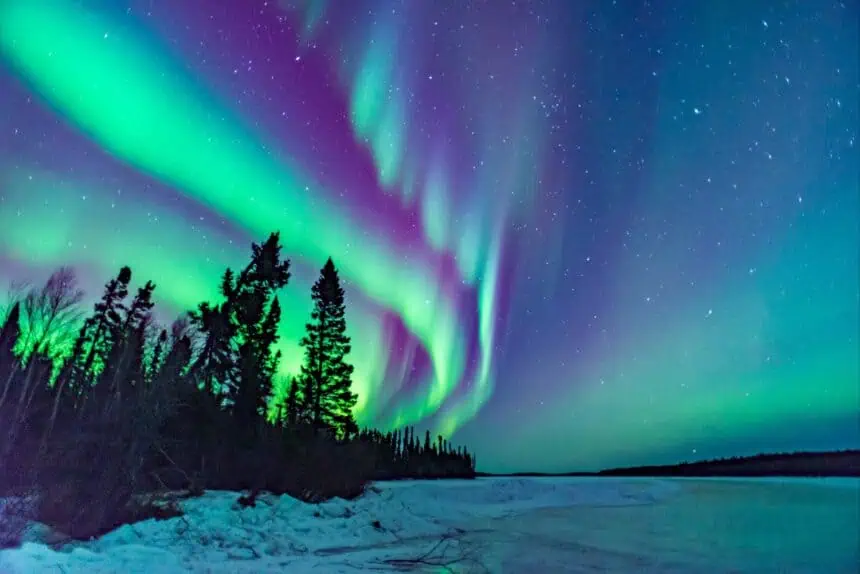
Tonight, Thursday, May 30, parts of Canada may be treated to a dazzling display of the Northern Lights, following the recent NOAA upgrade to a G2 geomagnetic storm. This spike in space weather activity comes after a series of solar flares, including a powerful X1.1-class flare on May 25, that has intensified auroral visibility across northern latitudes.
Best chances to view the aurora in Canada
Due to Earth’s current tilt and the recent new moon, skies across northern Canada will be particularly dark—ideal conditions for aurora borealis sightings. The following regions will have the highest likelihood of observing this natural spectacle:
Yukon, Northwest Territories, Nunavut, Northern British Columbia, Northern Alberta, Northern Saskatchewan, Northern Manitoba, Northern Ontario, and Northern Quebec.
These areas, especially those closest to the U.S. border, share the same geomagnetic latitude zones as North Dakota, Montana, and Maine, which are included in NOAA’s current alert. Therefore, the chance of seeing colourful auroral bands and pulsating curtains of light is significant in Canada tonight and potentially into Friday, May 31, and Saturday, June 1.
Understanding the G2 geomagnetic storm
NOAA’s Space Weather Prediction Center issued an updated alert after observing a G3 (strong) storm in the early hours of May 29, later stabilizing at G2 levels. This is due to the influence of a negative polarity coronal hole high-speed stream (CH HSS). When the solar wind reaches Earth’s magnetosphere with a southward-pointing magnetic field, it enables stronger coupling with Earth’s magnetic field, often triggering vivid auroras.
Current Kp index and auroral reach
The Kp index tonight is expected to reach 4 or higher, which indicates that the auroral oval will extend farther south than usual. According to NOAA, “the aurora will move further from the poles, it will become brighter, and there will be more auroral activity (motion and formations).”
Visual conditions and viewing opportunities
Thanks to the recent new moon on Monday, moonlight will not interfere with visibility. As we approach the June solstice, longer twilight hours in northern Canada might slightly delay optimal viewing times. Still, late-night to early-morning hours will remain prime windows for observation. Clear skies and dark rural areas far from urban light pollution offer the best chances to see the Northern Lights.
Solar activity remains high
On May 25, NASA’s observatory detected a strong X1.1-class solar flare, which temporarily knocked out shortwave radio communications over the Pacific Ocean. This event was followed by two medium-intensity M-class flares, pointing to increased solar activity during the current solar maximum phase. The coronal hole responsible for this geomagnetic activity has remained Earth-facing throughout the week, sustaining the possibility of continued auroras.
Stay alert for sudden activity
NOAA continues to monitor the situation and advises night sky watchers to stay updated through the Aurora Dashboard and real-time data platforms such as SpaceWeatherLive.com. These tools can track auroral oval shifts, solar wind parameters, and other space weather indicators that might lead to unexpected yet stunning aurora sightings.