
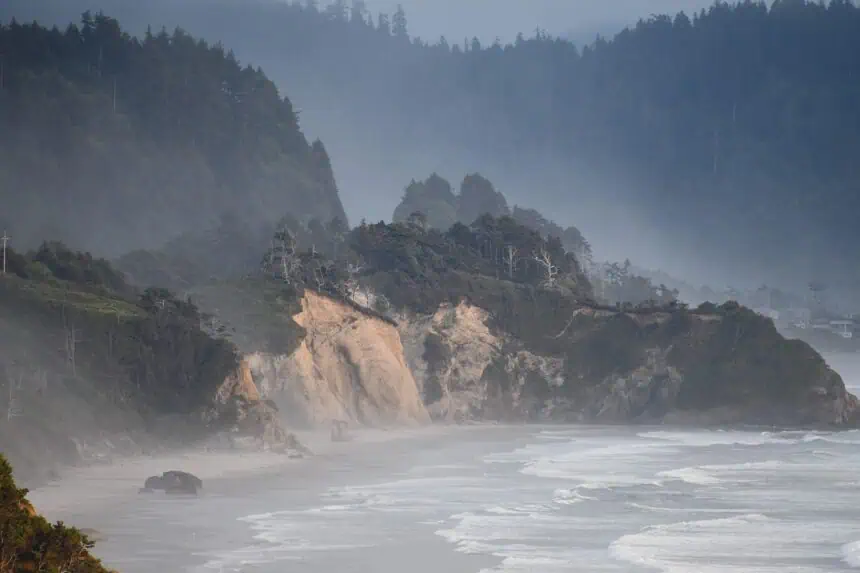

As of Saturday, May 24, a low-pressure system off the southern Pacific coast of Mexico holds an 80% chance of forming into a tropical cyclone within the next seven days, according to the National Water Commission (Conagua). If this system strengthens, it will be named Alvin, marking the first tropical cyclone of the 2025 Pacific hurricane season.
Key impact zones: Michoacán, Guerrero and Oaxaca
This potential tropical system is developing south of Michoacán, Guerrero and Oaxaca, where ocean conditions and atmospheric dynamics are currently favorable for cyclonic formation. If the system evolves, it could bring heavy rain, gusty winds, and dangerous surf conditions to coastal and inland communities in southern Mexico.
Broader cyclone forecast for 2025
Conagua projects a highly active season in the Pacific Ocean, with:
- 8 to 9 tropical storms
- 4 to 5 hurricanes reaching Category 1 or 2
- 4 to 6 major hurricanes, classified as Category 3, 4 or 5
Meanwhile, the Atlantic basin is also expected to see:
- 7 to 9 tropical storms
- 3 to 4 Category 1 or 2 hurricanes
- Several major hurricanes, ranging up to Category 5
What is a tropical cyclone?
A tropical cyclone is a powerful atmospheric system defined by rapidly rotating winds around a central low-pressure core. In the Northern Hemisphere, these winds rotate counterclockwise, while in the Southern Hemisphere, they turn clockwise. Cyclones are categorized based on wind intensity into:
- Tropical depressions
- Tropical storms
- Hurricanes (when winds reach higher thresholds)
Every hurricane is a tropical cyclone, but not all tropical cyclones become hurricanes.
Rainfall forecast: heavy precipitation across southern and central Mexico
The National Meteorological Service (SMN) expects intense rainfall in Oaxaca and Chiapas, very heavy showers in Guerrero and Veracruz, and strong storms across:
Coahuila, Jalisco, Michoacán, Estado de México, Morelos, Puebla, Tlaxcala and Tabasco.
Lighter showers are forecasted in:
Chihuahua, Nuevo León, Tamaulipas, San Luis Potosí, Zacatecas, Durango, Aguascalientes, Colima, Guanajuato, Querétaro, Hidalgo and Mexico City.
These precipitation events may be accompanied by lightning, hail, and can lead to flooding, mudslides, and rising river levels in vulnerable areas.
Extreme heat persists in parts of Mexico
Simultaneously, a heatwave continues to affect Sinaloa, Nayarit, Jalisco, Colima, Michoacán, Guerrero and Oaxaca. Scorching temperatures are also anticipated in Chiapas, Coahuila, Durango and Campeche, pushing daytime highs well into the upper 90s and 100s °F (above 38 °C), with localized heat indices reaching even higher.