

A rare geomagnetic storm lights up U.S. skies
A powerful geomagnetic storm is making headlines this June, promising a spectacular display of the Northern Lights across at least 17 U.S. states. According to the Space Weather Prediction Center (SWPC), this phenomenon—caused by a coronal mass ejection (CME) from the Sun—could create one of the most vivid auroral displays since 2024.
The CME, which erupted on the evening of May 30, is expected to reach Earth by Sunday, June 1, intensifying auroral activity through Monday, June 2, before gradually diminishing by Tuesday, June 3.
Visibility stretches far beyond the usual northern zones
The Northern Lights, also known as the Aurora Borealis, typically grace regions near the Arctic Circle, but this rare storm may push visibility much farther south than usual. States with optimal conditions—clear skies being the key—could include:
North Dakota, South Dakota, Michigan, Iowa, Vermont, New Hampshire, Maine, Washington, Idaho, New York, Alaska, Minnesota, Wisconsin, Montana, Alabama, and California.
This unusual breadth—from the Deep South to the Pacific Coast—is the result of G4-level storm activity, classified as “severe” on the space weather scale. These conditions are rare, and can even pose risks to infrastructure, including satellites, power grids, and navigation systems, according to the SWPC.
Science behind the aurora: from solar winds to Latin myths
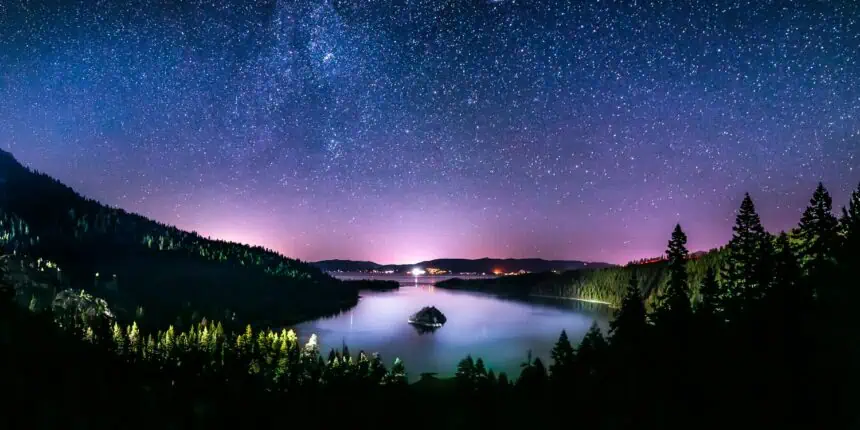
The aurora is created when charged particles from the solar wind interact with Earth’s magnetosphere, energizing atoms in the upper atmosphere and causing them to emit vivid light. These displays are commonly seen near the magnetic poles, but during intense geomagnetic storms, they can drift toward lower latitudes.
The term “Aurora” comes from Latin, named for the goddess of dawn, while “Borealis” means “northern” and “Australis” means “southern”—hence, Aurora Borealis in the northern hemisphere, and Aurora Australis in the southern.
Best times and regions for viewing
If skies remain clear, the Northern Lights could be visible as early as midday on Sunday, June 1, and continue through the evening of Monday, June 2. For the best view, residents in rural areas far from urban light pollution in Northern California, Northern Alabama, Iowa, Michigan, and New York State should be on alert for faint green or purple hues in the sky.
Infrastructure at risk, but skies may glow with color
While this celestial show offers a rare visual treat, it’s also a reminder of how solar weather can influence life on Earth. The SWPC warns that such intense geomagnetic activity could impact communications, GPS signals, and power systems—although most disruptions, if they occur, are likely to be temporary.
Keep an eye on the skies—and on updated alerts from the Space Weather Prediction Center—as this rare June aurora event unfolds.