
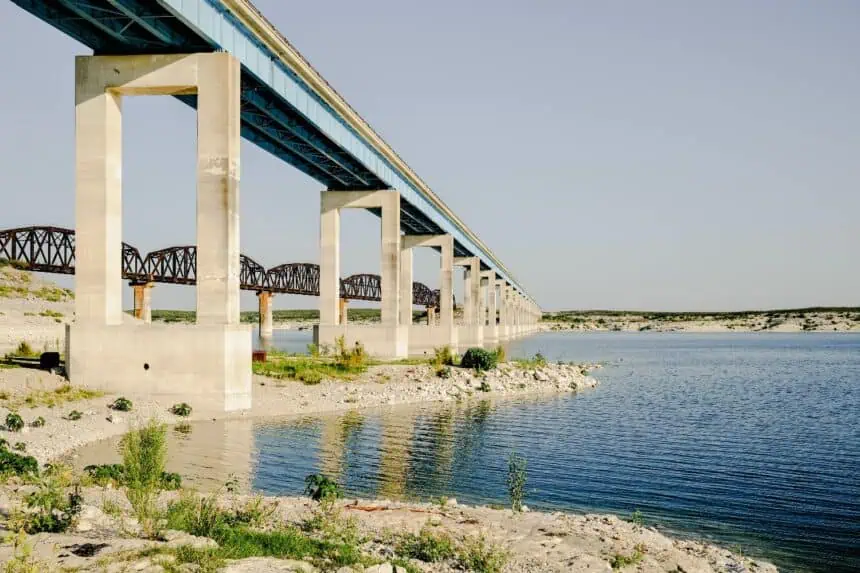

Recent rainfall across South Central Texas has brought some temporary relief, but drought conditions persist in the New Braunfels and San Antonio area. After over 1,377 days of drought, the region is still facing historic lows in key water bodies like Canyon Lake, Medina Lake, and the Edwards Aquifer, with slow river flow affecting recreational activities such as tubing and boating.
Reservoir conditions as of Thursday, June 5
Canyon Lake is currently at just 45.4% capacity, the lowest level since its creation in the 1960s. Despite its historical resilience, the lake is now presenting navigational hazards like tree stumps. However, significant rainfall could restore levels quickly due to the lake’s topography and catchment potential.
Medina Lake has fallen to a dire 2.1% full, marking the lowest level ever recorded. The lake has become a drought indicator due to its rapid responsiveness to rainfall—or the lack of it. This extreme depletion is severely affecting local agriculture, as farmers who rely on it for irrigation are struggling with water access.
The Edwards Aquifer, critical to San Antonio’s water supply, is still below average but has shown minor improvement thanks to recent storms. Though not at record lows, its level reflects the ongoing strain placed by a multi-year dry spell.
River conditions as of Thursday, June 5
The Guadalupe River in New Braunfels is flowing at just 25% of its typical rate, with a current level of 3.6 feet. While tubing remains technically feasible, especially downstream from Canyon Lake Dam, the experience is slower and shallower. The western tributaries have improved slightly due to rain, but water managers expect levels to drop again by late summer.
The Comal River, known for its consistent spring-fed flow, is holding at 3.48 feet. Although still navigable, its levels are also subpar, creating sluggish floating conditions through downtown New Braunfels.
Farther west, the Frio River at Concan is particularly stressed, measuring 3.37 feet in some sections, with flow nearly nonexistent in others. Tubing activities are now restricted to isolated segments of the river, which are mostly dependent on localized rainfall pockets.
Drought status as of early June
The latest drought monitor, updated on June 5, confirms that South Central Texas remains locked in an extended drought cycle, now surpassing three consecutive years. Some Bexar County zones received over 6 inches of rain in recent weeks, but this has yet to be reflected in the official drought index, which doesn’t immediately integrate short-term rainfall events.
Rain is forecasted for the coming days, but given the severity and duration of the drought, more sustained precipitation will be necessary to produce meaningful recovery in the area’s reservoirs, aquifers, and rivers.