
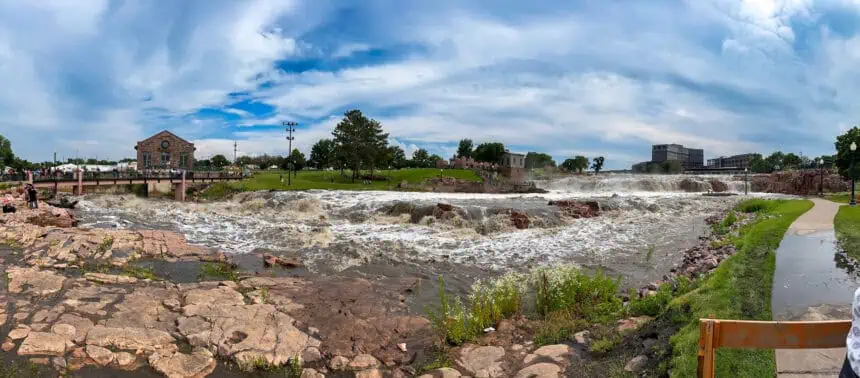

Heavy rains flood Marshall County and Big Stone County roads
Northeastern South Dakota and western Minnesota were hit overnight by intense thunderstorms, which led to widespread flooding on multiple secondary roads, making travel conditions dangerous through early Friday.
In South Dakota, Marshall County Emergency Manager Logan Roehr reported that by early morning, many roads were submerged under water, especially across rural corridors not equipped with proper drainage systems.
In Minnesota, the Big Stone County Sheriff’s Office issued a warning at 8 a.m. Friday, noting that U.S. Highway 75, County Road 12, County Road 25, and 360th Street, along with several others, were affected by rising water levels. They shared photos showing floodwater overtopping the pavement, especially at the junction of U.S. 75 and County Road 12, a notorious low spot near Big Stone Lake.
Rain totals soar above 7 inches in several towns
KELOLAND Meteorologist Scot Mundt highlighted that a wide swath of torrential rain swept through southern Marshall County, with the worst flooding seen around Britton, Sisseton, Big Stone City, and Ortonville.
Rainfall measurements include:
- 7.6 inches (193 mm) near Claremont
- 5.25 inches (133 mm) at Lake City
- 4.63 inches (118 mm) near Sisseton
- 4.18 inches (106 mm) near Big Stone City
In Big Stone City, Deb Wiik confirmed that 7 inches (178 mm) fell, flooding shoreline roads and recreational areas near the lakefront. The lake itself rose by 0.3 feet, reaching 966.95 feet above sea level by Friday morning, causing concern for dock stability and boater safety.
Floodwaters not expected to recede quickly
“The heaviest downpours came Thursday evening into the night,” said Mundt, emphasizing that accumulated saturation from Thursday’s 2 inches (51 mm) of rain added to Friday’s problems.
In Marshall County, some roadways may remain partially submerged for several days, especially in areas where terrain and drainage systems are inadequate. Although some water has begun to recede, Roehr cautioned that visibility of the road surface doesn’t necessarily mean it’s safe for travel.
Authorities urge residents to monitor lake levels, raise docks if necessary, and check wind conditions closely due to potential effects on moored watercraft in Big Stone Lake.
Photos from emergency agencies show extensive damage, with standing water surrounding infrastructure, eroded shoulders, and impassable stretches, especially in low-lying rural roads commonly used by residents and agricultural vehicles.
The situation continues to evolve, as stormwater runoff moves through the local watershed.