
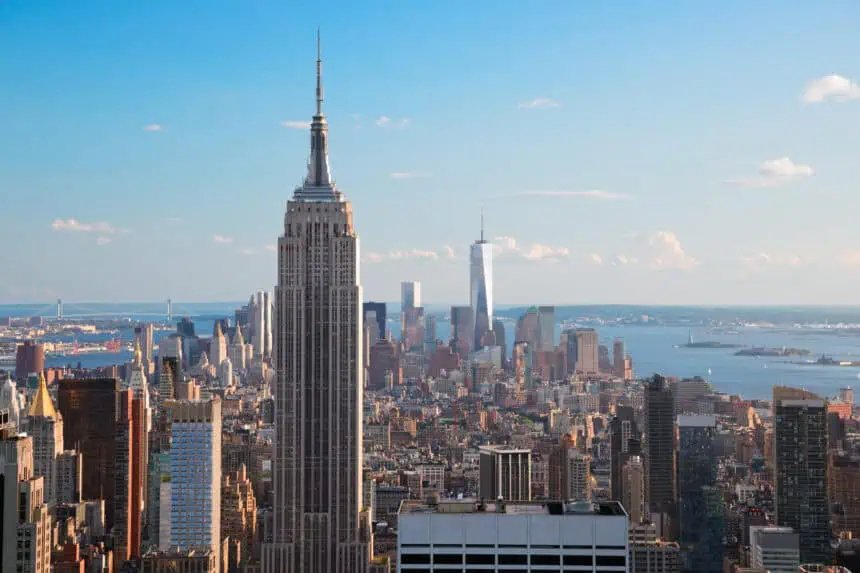

From Brooklyn to the Bronx, New York City is enduring a brutal heatwave that shows no signs of letting up. As of Monday morning, the city continues to sweat under extreme temperatures, with forecast highs reaching 102°F (38.8°C) by Tuesday, potentially breaking records set back in 1887. This sweltering spell, characterized by oppressive humidity and minimal overnight cooling, has quickly become one of the most intense heat events in recent years.
What’s happening in New York this week
Meteorologists are calling this one of the most widespread and dangerous heatwaves to hit the Midwest and East Coast in decades. In New York City, early-morning temperatures on Monday already surpassed 80°F (26.6°C), with heat indices approaching 105°F (40.5°C).
This type of heat isn’t just about numbers. According to Stephanie Van Oppen of Fox Weather, “It’s the type of air that feels like you’re walking through a swimming pool.” That intense moisture in the atmosphere makes the air feel heavier, keeping sweat from evaporating, which is the body’s natural cooling system.
NYC primary election collides with peak heat
As voters in New York City head to the polls for Tuesday’s Democratic mayoral primary, the heatwave is expected to peak. Temperatures are forecast to hit triple digits, and feels-like levels could surpass 105°F (40.5°C) during the afternoon.
With older voters forming a critical bloc—Andrew Cuomo currently leads among voters 50 and over, with 42% support, according to a Siena College/AARP poll—concerns are rising that dangerous heat could impact turnout.
Governor Kathy Hochul has issued an “extreme heat” emergency alert, warning that heat-related illness is the leading weather-related cause of death in the U.S. “I cannot emphasize this enough,” she said. “Extreme heat can be deadly.”
Who is most at risk during this heatwave
Health officials continue to stress that children, elderly residents, and individuals without air conditioning are the most vulnerable. In urban areas like Harlem, Brownsville, and parts of the Bronx, where green space is limited and apartment ventilation is poor, the risk is especially high.
The Centers for Disease Control and Prevention (CDC) notes that signs of heat exhaustion include heavy sweating, muscle cramps, nausea, dizziness, and persistent headaches. If these symptoms persist despite rest and hydration, urgent medical attention is required.
Why is this happening now?
The current heatwave, which began on June 20, was triggered by a stationary high-pressure system over the central United States. That system has since shifted east, spreading extreme heat across the Great Lakes, Ohio Valley, Northeast, and Mid-Atlantic.
Meteorologist Jonathan Erdman of Weather.com described it as a “dangerous, widespread heat event”, with humidity amplifying the impact. Chad Merrill of AccuWeather noted, “The magnitude and longevity of this heat wave will be a shock to the system.”
So far, over 200 million Americans are under heat advisories, making this one of the largest-scale events in recorded history.
New York’s forecast: No immediate relief in sight
This week’s forecast shows continued heat across New York, New Jersey, Pennsylvania, and Washington D.C., with Boston also bracing for highs near 100°F (37.7°C) by midweek.
Compounding the problem, overnight lows are staying above 75°F (24°C) in many parts of New York City, meaning no significant cooling even after sunset. Triple-digit heat indices are expected to persist through at least Friday, with intense humidity making each day feel more suffocating.
What defines a heatwave in the U.S.
The National Weather Service defines a heatwave as two or more consecutive days of unusually high temperatures over a broad area. But when this pattern is paired with high humidity, poor air circulation, and elevated nighttime temperatures, it becomes a public health emergency.
These conditions limit the body’s ability to cool itself and increase the risk of heatstroke, dehydration, and cardiovascular stress—particularly for the elderly, young children, and people with pre-existing conditions.
How New York City is responding
With energy usage spiking and the power grid under heavy load, city officials are closely watching for signs of blackouts. Cooling centers are open across all five boroughs, and temporary shelters have been set up to assist homeless residents and those without access to air conditioning.
Emergency services remain on high alert for wildfires, flash storms, and heat-related illness, which often spike during extended heatwaves like this one.
The city’s public health message is clear: avoid going out during peak hours unless absolutely necessary, and remain in cool, ventilated environments.