

New Mexico, known as the Land of Enchantment, typically receives an average of 13.47 inches (342.1 mm) of annual rainfall. But nearly seven decades ago, in the northeastern corner of the state, almost that entire annual average fell in a single day.
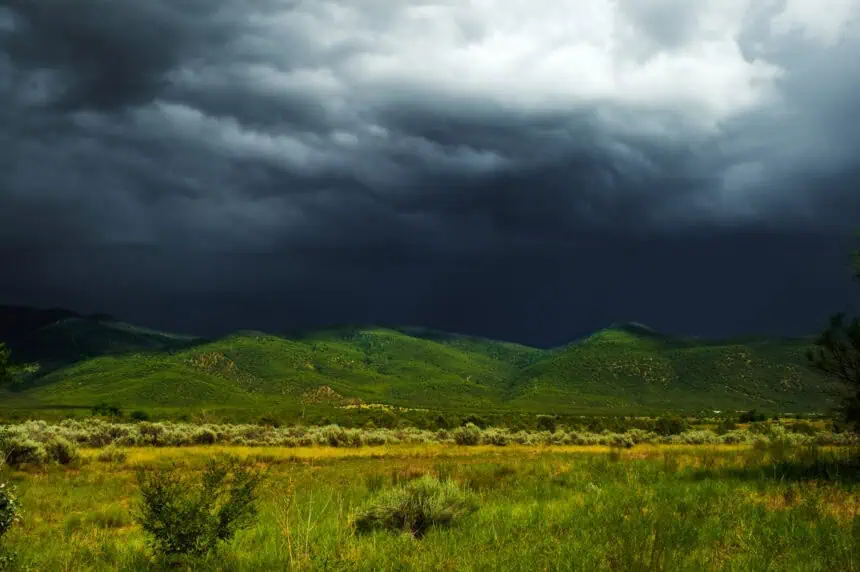
Between May 18 and May 19, 1955, Lake Maloya, located in Sugarite Canyon State Park, experienced an unprecedented downpour: 11.28 inches (286.5 mm) of rain within 24 hours. This extreme weather event remains the highest 24-hour rainfall total ever recorded in New Mexico, according to the National Centers for Environmental Information.
Lake Maloya lies directly on the New Mexico–Colorado border, just northeast of Raton, nestled within the rugged canyonlands of Colfax County. This part of the state, though often drier than its southern counterparts, has occasionally seen isolated weather extremes, and this 1955 storm stands as one of its most dramatic.
Other weather milestones in New Mexico
Beyond that record rainfall, New Mexico has witnessed other remarkable weather extremes:
On June 27, 1994, the Waste Isolation Pilot Plant near Loving reached a scorching 122°F (50°C) — the hottest temperature ever recorded in the state.
In contrast, Gavilan plunged to a frigid -50°F (-45.6°C) on February 1, 1951, the coldest temperature in New Mexico’s history.
The heaviest 24-hour snowfall happened on February 3, 1964, when 41 inches (104.1 cm) of snow blanketed Kelly Ranch.
And the deepest snowpack was measured at 96 inches (243.8 cm) on March 15, 1941, at Lee’s Ranch.
Recent weather and monsoon moisture
As of today, Tuesday, July 1, 2025, Albuquerque and other central regions are experiencing monsoon moisture as the summer rainy season pushes further across central and northern New Mexico. Afternoon thunderstorms and localized downpours are increasingly common as humidity levels climb.
Rainfall extremes in neighboring states
While New Mexico’s single-day rainfall record is impressive, surrounding states have seen even more intense precipitation events.
In Texas, the town of Alvin holds the continental U.S. record for 24-hour rainfall, with a staggering 42 inches (1066.8 mm) falling between July 25 and 26, 1979.
Oklahoma’s highest one-day total stands at 15.68 inches (398.3 mm) in Enid on October 11, 1973.
In Arizona, Workman Creek recorded 11.4 inches (289.6 mm) of rain over September 4–5, 1970, closely rivaling Lake Maloya’s total.
Even Utah, generally known for its dry high deserts, saw 5.08 inches (129 mm) of rain at Deer Creek Dam on February 1, 1963.
These extremes offer a powerful reminder of how weather in the American Southwest can shift from bone-dry drought to torrential storms in just hours.