
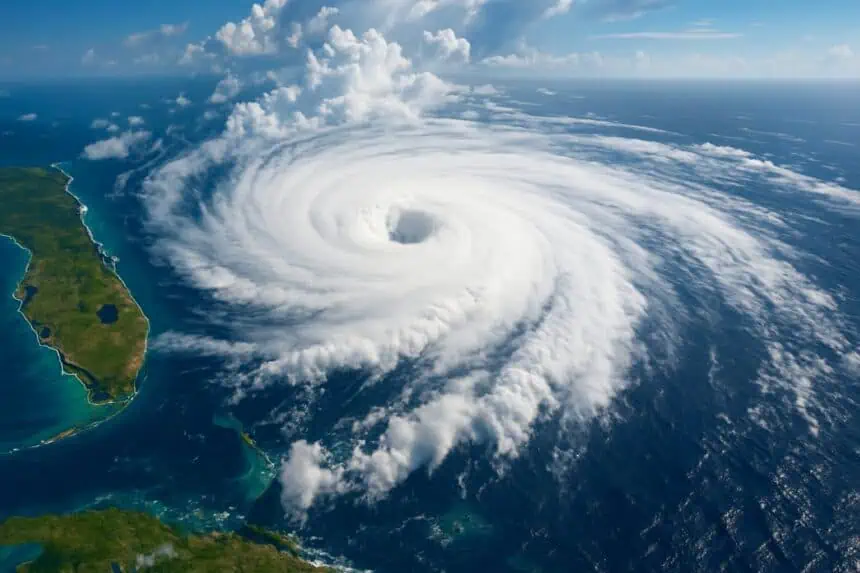
 Tropical Storm Chantal continues to intensify over the Atlantic, and although it won’t make a direct landfall in Florida, its effects will still be felt sharply along the eastern coastline. As of this Saturday morning, the National Hurricane Center (NHC) has confirmed that the system—originally Invest 92L—has strengthened into Tropical Storm Chantal, now swirling over the warm waters of the Gulf Stream.
Chantal to bring rough seas, rain and lightning storms to Florida
While Florida won’t face a direct landfall, residents along the east coast, especially from Daytona Beach to West Palm Beach, can expect heavy downpours, frequent lightning, and dangerous rip currents through Saturday evening. The most intense rainfall is forecast to hit after 3 p.m., with skies remaining cloudy and unstable through the weekend.
Strong winds are not out of the question either, especially in coastal communities, where gusts may reach 40 to 50 mph (64–80 km/h). Boaters and beachgoers are being warned of rough surf conditions, particularly as Chantal churns near the Florida-Georgia line, generating unstable swells.
Chantal to make landfall in South Carolina early Sunday
Forecast models now indicate that Chantal is on a path to make landfall in South Carolina by Sunday morning, with tropical storm warnings already in effect for parts of the Palmetto State’s coastline. There’s potential for wind gusts near hurricane strength, and up to 8 inches (203 mm) of rain are possible in portions of central North Carolina, especially along the I-95 corridor.
As it tracks inland, the storm is expected to weaken, but remnants could still bring gusty winds, heavy rainfall, and coastal flooding to areas from Virginia up toward the Mid-Atlantic early next week.
Could Chantal reemerge over the Atlantic next week?
There remains a possibility that Chantal could exit the East Coast and reorganize in the open Atlantic next week. Forecasters are watching this scenario closely, though no definitive trend has been confirmed yet.
Meanwhile, the Atlantic hurricane season, which began officially on June 1 and runs through November 30, remains unusually quiet—a stark contrast to 2024, which ended with 18 named storms, including 3 landfalling hurricanes in Florida.
As of today, Saturday, July 6, 2025, Chantal is the first named storm to significantly threaten the Southeastern United States, offering a reminder that despite a slow start, hurricane season can escalate quickly, particularly as we approach its peak in mid-September.