
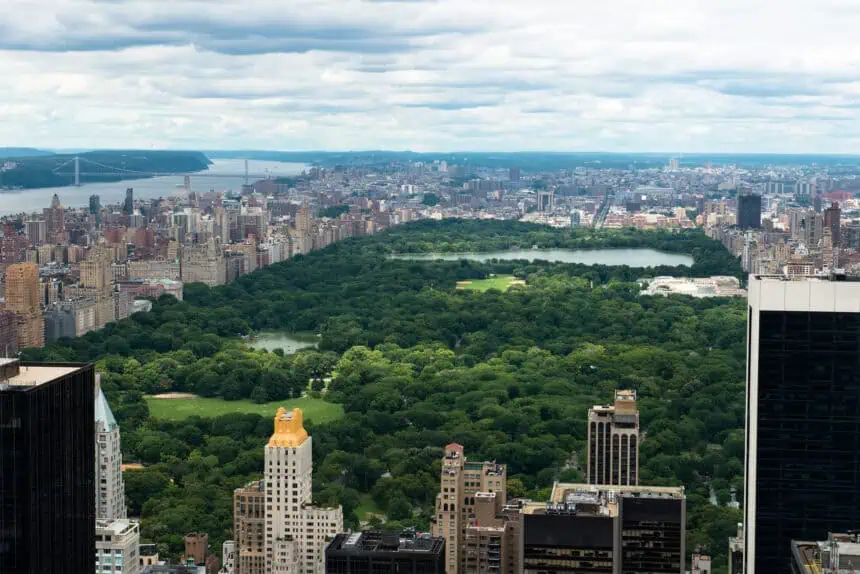

Thursday, July 11 begins in New York City under a sky that’s expected to remain mostly cloudy for much of the day, as the city braces for another warm midsummer stretch. With temperatures climbing to around 84°F (29°C), and humidity slowly building, today’s forecast suggests a typical humid July day, though not without its subtle shifts.
The chance of rain remains low, around 25%, but enough to warrant some attention—especially in the late afternoon hours, when isolated showers or even a brief thunderstorm could sneak through. Cloud cover is expected to hover at about 60%, dimming the sunlight and keeping the UV index high, peaking at 9, which means sunburn risk remains elevated during midday.
Winds will be gentle, blowing out of the west at approximately 4 mph (7 km/h)—hardly enough to stir the warm, dense air, and offering minimal relief from the heat. It’s the kind of day where the air feels heavier as the afternoon wears on.
By nightfall, temperatures will settle near 72°F (22°C), providing a slightly cooler but still muggy evening. Rain chances drop to 11%, with clouds lingering at 57%, keeping the sky mostly overcast. Winds taper off further, drifting around 2.5 mph (4 km/h)—barely noticeable.
A closer look at New York’s seasonal backdrop
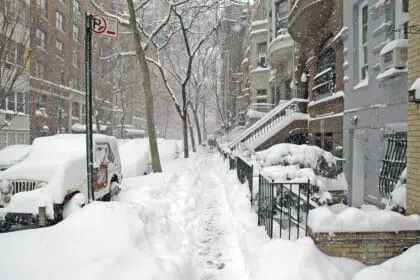
New York City, perched on the Atlantic coast in the northeast United States, lives through all four seasons in full force, shaped by a humid continental climate. Winters can bring snow and sub-freezing temperatures, while summers—like now—are often hot, sticky, and storm-prone.
Rain falls throughout the year, but in July and August, those showers often turn into brief but intense thunderstorms, driven by the heat and moisture in the air. Still, thanks to the nearby ocean, temperature extremes are often moderated: summers stay hot but rarely unbearable, and winters cold but seldom brutal.
How New York fits into America’s climate map
With its immense size and varied geography, the United States covers almost every climate type imaginable.
Here in the Northeast, the dominant climate is humid continental—marked by wet, snowy winters and stormy summers. Further south, into the Southeast, the climate shifts to humid subtropical, where summers are long and steamy, and winters mild and wet.
Across the West, things look dramatically different. The interior regions, including parts of the Rocky Mountains and Great Plains, experience a cold semi-arid climate, where precipitation is scarce, and winter temperatures can drop sharply.
In the Southwest, the desert regions showcase both hot and cold arid zones—with scorching summers, cool desert nights, and very little rain year-round.
Then there’s the West Coast, where the Mediterranean climate defines cities like Los Angeles and San Francisco: rainy winters, sunny summers, and a rhythm totally different from the muggy days unfolding this week in New York.