
 The next ‘storm of the century’ could be even stronger
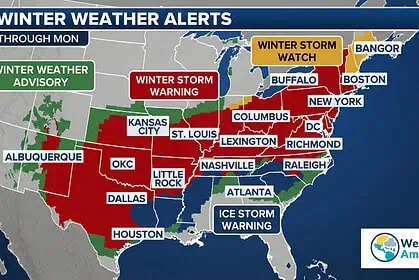
New York, Tuesday, July 15, 2025 (9:00 AM local time) – The most destructive nor’easters—those devastating, often deadly storms that hammer the East Coast of the United States with torrential rain, heavy snow, and widespread flooding—are gaining strength as a direct result of climate pollution, according to a new study by researchers at the University of Pennsylvania.
These powerful weather systems, which usually form between September and April, are driven by the temperature contrast between cold Arctic air and warm, moist Atlantic air. In a warming world, that contrast is diminishing. Yet, researchers now say fewer storms doesn’t mean less danger—because the intensity of the strongest ones is on the rise.
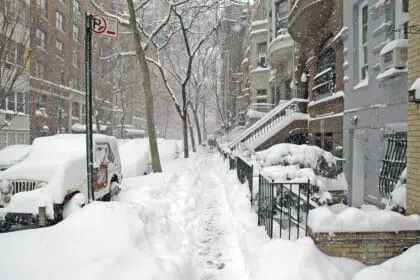
Michael Mann, a climate scientist and lead author of the study, began his investigation after being stranded in a Philadelphia hotel for three days during the 2010 ‘Snowmageddon’, a paralyzing blizzard that dumped over 20 inches (50 cm) of snow across parts of Pennsylvania, Maryland, Virginia, and West Virginia, killing 41 people and cutting power to hundreds of thousands. That storm, Mann said, sparked a lasting question: How will global warming reshape the strongest nor’easters?
Fifteen years later, his team has answers. By analyzing historical data from 1940 through 2025, using a sophisticated cyclone-tracking algorithm, the researchers built a digital atlas of nearly 900 nor’easters. Their results, published in the Proceedings of the National Academy of Sciences, reveal that the peak wind speeds of the most extreme nor’easters have increased by around 6% since 1940.
While 6% may sound minor, it translates to a 20% jump in destructive potential, Mann explained. “That’s substantial.”
They also found a 10% rise in precipitation, both in rainfall and snowfall. Warmer oceans and atmosphere—basic physics, Mann noted—mean more evaporation and more moisture in the air, which ultimately leads to heavier downpours or blizzards when those systems make landfall.
The March 1993 ‘Storm of the Century’, one of the most violent on record, serves as a sobering benchmark. With winds topping 100 mph (160 km/h) and snow accumulations exceeding 4.9 feet (1.5 meters) in some areas, it caused more than 200 deaths and billions in damages.
Another infamous example, the Ash Wednesday Storm of 1962, left a path of destruction along the East Coast equivalent to that of a major hurricane, with economic losses in today’s dollars in the tens of billions.
While the number of nor’easters may decrease as the Arctic warms faster than the rest of the Northern Hemisphere, reducing the fuel that drives them, the most powerful ones are getting worse—a fact that raises serious concerns for coastal cities.
The study also suggests that flood risks in many East Coast urban areas may be significantly underestimated. “Nor’easters have been overlooked,” Mann said. “And that’s adding to the rising coastal threat we haven’t paid enough attention to.”
Jennifer Francis, a senior scientist at the Woodwell Climate Research Center, who was not involved in the research, emphasized the urgency of proactive planning in northeastern coastal communities. “Preparedness is always cheaper than disaster recovery,” she said in an interview.
Judah Cohen, a climate researcher at MIT, added that these findings highlight the unpredictable impacts of the climate crisis. “It’s counterintuitive,” he said. “Global warming can actually lead to episodes of extreme winter weather.”
Even as snow seasons shorten in much of the United States, individual storms may become more intense, with periods of deep cold and heavy snow still very much part of the forecast. As Mann put it, “Single events could become even more extreme.”