
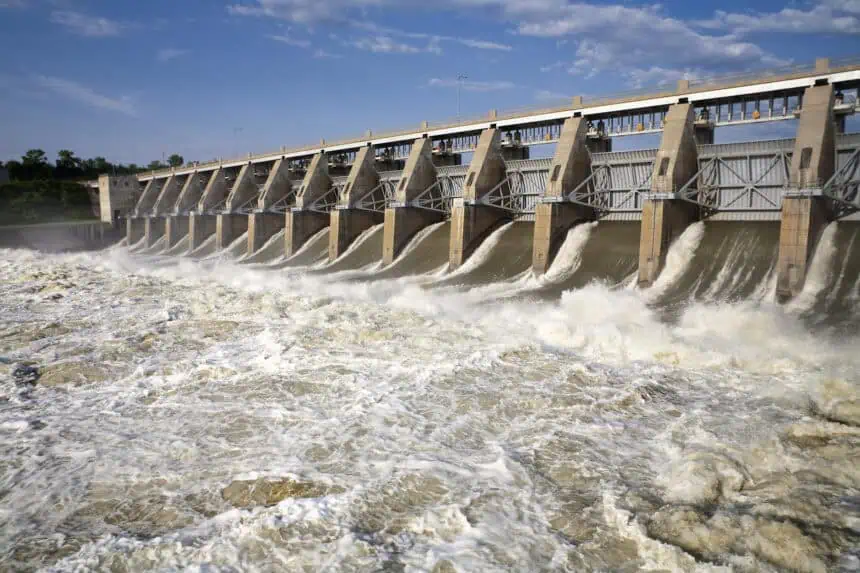

Kansas City, Missouri — As of Thursday morning, the Missouri River is rising rapidly and is now above flood stage, according to the Missouri Levee and Drainage District Association (MLDDA). The latest readings show a significant increase caused by persistent heavy rainfall across eastern Kansas, west-central Missouri, and northwest Missouri.
MLDDA reports that several tributaries are reacting swiftly to this precipitation, with flash flooding already a serious concern throughout the Kansas City metropolitan area. Multiple flash flood warnings were issued Thursday morning, adding urgency to the evolving flood situation.
Downstream locations — including Napoleon, Waverly, and Miami — are expected to experience major river rises, with forecasts from the National Weather Service (NWS) indicating the Missouri River could reach a crest of 19.6 feet (5.97 meters) by Friday evening, well above the flood stage of 18 feet (5.49 meters). Overnight, water levels jumped from 13 feet (3.96 meters) to 18.32 feet (5.58 meters), a dramatic surge with more rain expected through the weekend.
A flood warning for the Missouri River was issued by NWS and will remain in effect from early Friday through late Sunday morning. Forecasts suggest the river may begin to drop back below flood stage by late Saturday morning, assuming no further significant rainfall alters projections.
In Kansas, the situation on Indian Creek near State Line Road is stabilizing. The creek surged from 10.33 feet (3.15 meters) Wednesday night to 23.56 feet (7.18 meters) by 8:15 a.m. Thursday, but is now beginning to recede. However, The Blue River at U.S. 71 Highway in Missouri is currently cresting at 25.84 feet (7.87 meters), having risen from just 2.26 feet (0.69 meters) on Wednesday night.
Rivers and streams are projected to recede quickly, but the forecast includes additional rainfall over the next three days, increasing the risk of renewed flooding and making conditions highly unpredictable.
As of 6:40 a.m. Thursday, Kansas City had already recorded 2.04 inches (5.18 cm) of rainfall, marking the second consecutive day of over 2 inches — a rare event that has only happened 12 times in the past 137 years, according to the National Weather Service.