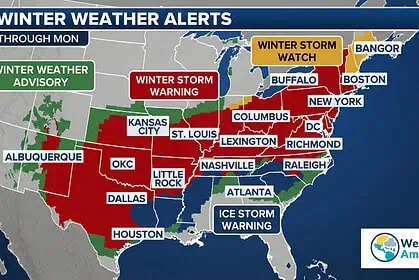



Late Thursday evening, Maine will experience a rare late-season nor’easter, an event not often seen this deep into May. According to meteorologist Derek Schroeter from the National Weather Service in Gray, this system is expected to bring steady rain and strong wind gusts reaching up to 45 miles per hour (72 km/h), followed by snowfall in the higher elevations.
Rain and snow on the way
Rain is forecasted to begin late Thursday night, gradually transitioning to snow in mountainous regions as temperatures drop. This shift in precipitation type, especially in areas like Mount Washington, reflects the unusual persistence of wintry weather this season. While the summit once saw over 30 inches (76 cm) of snow during a similar storm in 2017, current predictions suggest it will receive just over seven inches (18 cm) this time.
Jet stream blocking over Greenland
The slow progression of this nor’easter is due to a jet stream block over Greenland, which has stalled weather systems across the Northeast. Schroeter noted that these systems now take two to three days to travel from the Ohio Valley to New England, followed by another day or two to move off into the Atlantic. This atmospheric setup has kept clouds and rain hanging over the region longer than usual for May.
Winds and marine concerns
While gale warnings are in effect along the coast, flooding is not a major concern. The storm surge is expected to align with low tide, which will mitigate more serious coastal impacts. Winds will begin to calm Friday morning, reducing hazards by the start of the weekend.
Looking ahead to the weekend
Although rain may linger into Saturday and Sunday, the weather will gradually improve, with warmer and drier conditions expected by Sunday into Monday. However, Schroeter warned that the jet stream pattern currently driving these prolonged rain events is forecasted to return late next week, potentially bringing more unsettled weather to Maine.
This nor’easter serves as a reminder of how unpredictable late spring weather can be in New England, especially under the influence of larger atmospheric patterns.