

Extraordinary chance to see the aurora borealis across the United States
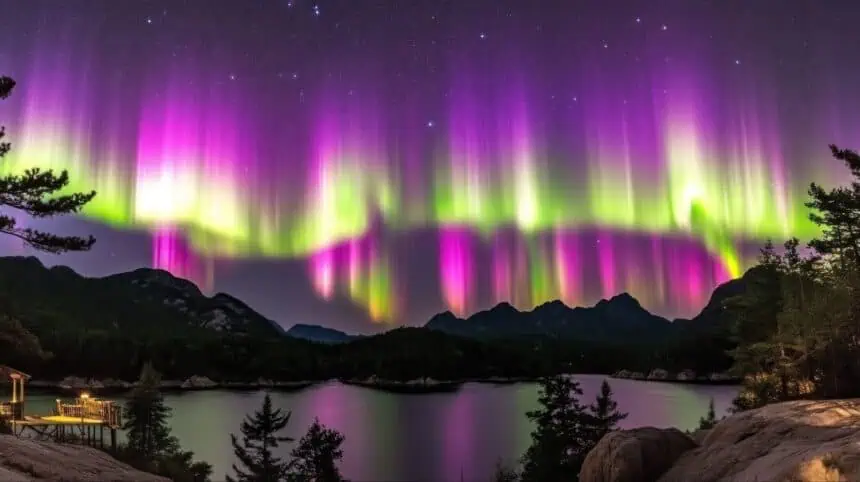
Wednesday night, residents in 10 northern U.S. states could witness a rare and breathtaking celestial show. According to the National Oceanic and Atmospheric Administration (NOAA), a series of geomagnetic storms has pushed the aurora visibility line farther south, giving more Americans a chance to see the Northern Lights in action.
Where will the aurora borealis be visible?
The highest chances remain in Alaska and northern Canada, but the NOAA has also forecast visibility across several northern U.S. states. With a Kp index of four out of nine, skies could light up over:
Wyoming, Iowa, New York, Vermont, and New Hampshire, which already saw auroral activity Tuesday night and early Wednesday morning when the Kp index hit five.
Other areas with moderate chances include northeastern Washington, northern Idaho, Montana, North Dakota, northern Minnesota, and Upper Michigan.
A lower but still possible chance of visibility extends into South Dakota, Wisconsin, and Maine.
Best time to watch the sky
The ideal viewing window for the Northern Lights is between 10:00 p.m. and 2:00 a.m. local time. NOAA recommends a north-facing spot with a clear view, well away from artificial lights to maximize visibility.
Weather conditions and radio interference
The three-day aurora forecast from NOAA projects a Kp index of three or above through Friday, meaning enhanced auroral activity is expected to continue.
However, this solar activity may also cause minor to moderate radio blackouts, especially affecting high-frequency communications. NOAA warned there’s a slight risk of stronger blackouts, though they’re unlikely to cause widespread disruption.
Why is this happening now?
This week’s stunning sky shows are linked to a “solar maximum” that occurred in October, part of the sun’s 11-year solar cycle. During this period, the sun emits increased solar flares and coronal mass ejections, sending electrons toward Earth that collide with oxygen and nitrogen in the atmosphere. These energized particles then release the colorful, swirling patterns we recognize as the aurora borealis.
How to capture the moment
To photograph the Northern Lights, experts recommend using a DSLR camera with a tripod, a wide-angle lens, an aperture (F-stop) of four or lower, and manual focus set to infinity. For smartphones, simply enable night mode and turn off the flash to get the best results.
With skies primed for one of nature’s most mesmerizing displays, millions of Americans may get the chance to witness the magic of the aurora—no passport required.