

A hot and rainy summer ahead for Tucson
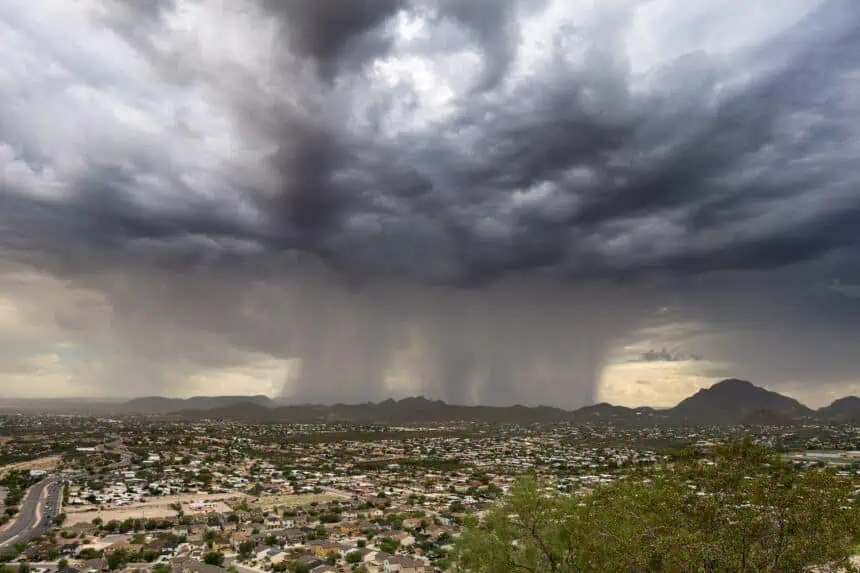
Summer 2025 is shaping up to be wetter than usual for Tucson, with a monsoon expected to bring above-average rainfall across Arizona, according to the National Weather Service. Although the official monsoon season runs from June 15 through September 30, the rains typically begin a bit later, says meteorologist Alex Edwards.
In 2024, the month of June ranked among the hottest and wettest on record, coming in as the fourth hottest and tenth wettest. This June could follow a similar pattern, especially after an exceptionally dry winter.
Less snow, more rain: a surprising connection
Edwards explains that dry winters often lead to more active monsoon seasons. The reason? The snowpack in the surrounding mountains. An abundant snowpack can delay the arrival of moisture, but this year, the mountains saw virtually no snow—a condition that may pave the way for an early and intense monsoon onset.
Rising temperatures across all of Arizona
Above-normal temperatures are anticipated statewide, although Edwards notes it’s still difficult to predict just how much hotter it will get. He stresses the importance of monitoring the forecast, not only for storm activity but also for heat safety, particularly during peak sunlight hours.
Summer 2024: wet start, dry finish
In 2024, Tucson recorded over five inches of rain (about 127 mm) during the first half of the monsoon season, but less than half an inch (just over 12 mm) in the second half. It was ranked as the 61st driest monsoon period in Tucson’s weather records, which go back to 1895.
In mid-July, a storm complex swept through Pima County, bringing 70 mph winds (about 113 km/h), microbursts, and triggering two tornado warnings. The storm uprooted trees, downed power lines, and ripped the roof off an auto parts store.
The heat was relentless too: June was the fourth-hottest, July the second-hottest, and August the sixth-hottest on record for the city.
Flash flooding and storm danger during monsoon season
Tucson’s monsoon can bring sudden, dangerous flash floods, catching hikers and drivers off guard. The National Weather Service advises staying informed through live forecasts, subscribing to lightning and severe weather alerts, scanning the entire sky before leaving shelter, and discussing flood insurance options with your provider.