

Geomagnetic activity intensifies: auroras may light up American skies
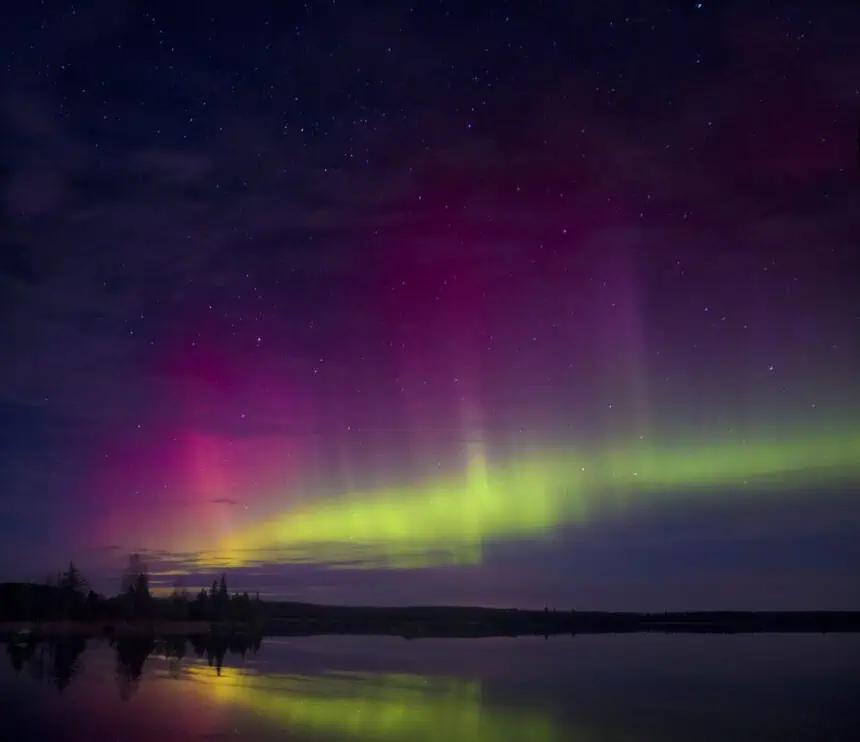
Tonight, Saturday, May 31, and through the weekend, the northern lights could glow above a wide swath of the United States, painting the sky in shimmering shades of green and purple. The National Oceanic and Atmospheric Administration (NOAA) has forecast increased geomagnetic activity, meaning a rare opportunity for skywatchers far beyond the Arctic Circle to witness this breathtaking phenomenon.
What’s causing this celestial event?
Earth is currently under the influence of high-speed solar wind, which is pressuring the planet’s magnetic field, triggering minor G1 geomagnetic storm conditions — though stronger activity isn’t off the table. Just a few days ago, a surprise G3 storm on May 28 sparked auroras as far south as Italy and 17 U.S. states, despite initial forecasts predicting only mild activity.
This weekend, forecasters at NOAA’s Space Weather Prediction Center anticipate the Kp index to peak at 4.67. That’s strong enough to push the auroral oval farther south, meaning that some mid-latitude states may catch a glimpse of the northern lights — conditions permitting.
Where might you see the northern lights tonight and this weekend?
According to NOAA’s latest aurora forecast, here are the 15 U.S. states most likely to witness auroral activity, ranked from most to least favorable based on location relative to the auroral oval:
Alaska, Montana, North Dakota, Minnesota, Upper Michigan, Wisconsin, Idaho, Vermont, Maine, New Hampshire, New York, South Dakota, Wyoming, Washington, and Iowa.
If the geomagnetic activity unexpectedly escalates to G3 levels, auroras could stretch even farther south — possibly illuminating skies in Illinois or Oregon.
When and how to spot the aurora borealis
For the best chance to see the northern lights, head to a dark, north-facing location far from urban light pollution. As summer solstice (June 20–21) approaches, the night sky grows shorter, so 1–2 a.m. local time may be your best window.
Conditions are ever-changing. You can stay ahead by using apps like “My Aurora Forecast & Alerts” or “Space Weather Live”, available on both iOS and Android, to receive real-time aurora alerts and data tailored to your current location.
Keep your eyes on the heavens — Mother Nature might just put on a show tonight.