

Geomagnetic storms light up the sky from Sunday through Monday
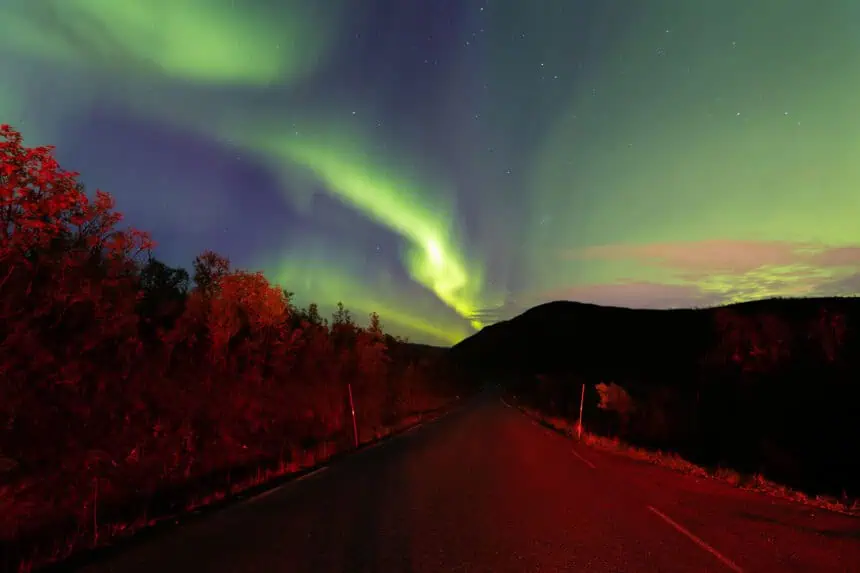
Between Sunday night and Monday evening, the skies over much of the northern United States may offer a rare and stunning spectacle: the Aurora Borealis. Thanks to elevated geomagnetic activity—triggered by high-speed solar winds—the National Oceanic and Atmospheric Administration (NOAA) is forecasting increased auroral visibility, with minor storms (Kp 4–5) expected to disrupt Earth’s magnetic field during this window.
Where the northern lights might be seen tonight
The highest chances remain over northern Canada and Alaska, but NOAA’s forecast suggests that skies in at least 10 northern U.S. states could light up in vibrant green, purple, and red hues.
Those in northeastern Washington, northern Idaho, Montana, North Dakota, northern South Dakota, Minnesota, northern Wisconsin, Upper Michigan, northern Maine, and even parts of Vermont, New Hampshire, New York, Iowa, and Wyoming should watch the northern horizon between 10 p.m. and 2 a.m. local time, weather permitting.
These areas lie beneath NOAA’s projected Kp 5 activity line, meaning the aurora may dip unusually far south—a treat for states that rarely see these polar lights.
Why this is happening now
The activity stems from a coronal hole—a region of the sun’s surface that’s cooler and less dense—which is releasing high-speed solar winds. These winds, upon reaching Earth, cause geomagnetic storms that shake up our magnetosphere, energizing particles in the atmosphere that interact with oxygen and nitrogen. The result? Electrically charged collisions that radiate multicolored dancing lights in the night sky.
This surge in auroral activity aligns with the ongoing solar maximum—a peak in the 11-year solar cycle—which began in late 2024 and is expected to intensify into early 2026. As solar flares and coronal mass ejections become more frequent, events like this are likely to become more common.
Tips to maximize visibility and capture the moment
Although visibility depends heavily on cloud cover and light pollution, NOAA recommends heading to a dark, elevated location with a clear view toward the north. Urban lights should be avoided.
For those hoping to photograph the display, NOAA and NASA advise using a tripod, switching to night mode on smartphones, disabling flash, and setting cameras to manual focus with a longer exposure time.
Tonight may be the perfect chance for millions of Americans to witness a natural wonder normally reserved for polar latitudes—right from their own backyards.