
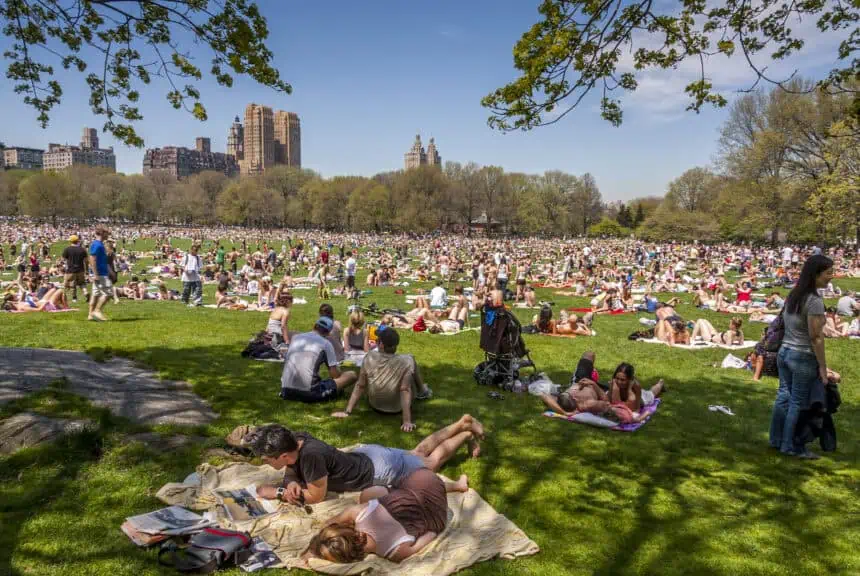

An extreme heatwave is set to strike New York City starting Monday, June 24, just as voters head to the polls for the mayoral primary election, with temperatures expected to soar to a blistering 100 degrees Fahrenheit (37.7 °C) — potentially breaking a nearly 140-year-old record.
Fox Weather confirmed Wednesday that this will be New York’s first true heatwave of 2025, following a cool and rainy June that’s been more reminiscent of Seattle than the Northeast. Meteorologist Stephanie Van Oppen warned of a sharp and sudden spike in temperatures, accompanied by sweltering humidity.
From cool to scorching: June heat may break records
The heat will start building on Thursday, with humid highs climbing into the upper 80s (around 31 °C). From there, it’s expected to stay hot through the weekend, reaching a forecast high of 92 °F (33.3 °C) on Sunday.
By Monday, the temperature is projected to climb to 97 °F (36.1 °C). But the real scorcher will be Tuesday, June 24, when thermometers could hit a searing 100 °F (37.7 °C) — possibly surpassing the city’s historic June 24 record of 97 °F, set in Central Park in 1888.
Hot start to the week as New Yorkers head to the polls
Tuesday’s heat coincides with the start of in-person voting in the city’s high-stakes mayoral primary, adding even more intensity to an already heated political atmosphere. Van Oppen expressed concern about the abrupt transition, noting, “My biggest worry is that people aren’t used to the heat. It could put people at extra risk.”
Relief expected midweek with return of rain and cooler temps
Relief should arrive by Wednesday, when showers and lower temperatures are expected to move in. But the drastic swing from cool to extreme heat is what makes this stretch of June unusually intense, Van Oppen said — though it doesn’t necessarily mean New York is in for a scorching summer overall.
Still, the chances of a hotter-than-average summer remain higher than usual this year, based on seasonal outlooks.
“If you’ve been waiting for summer, this might be the weather pattern that finally brings it in,” Van Oppen said.