

Updated Tuesday, June 24, 2025, 10:00 a.m. (local time – New York)
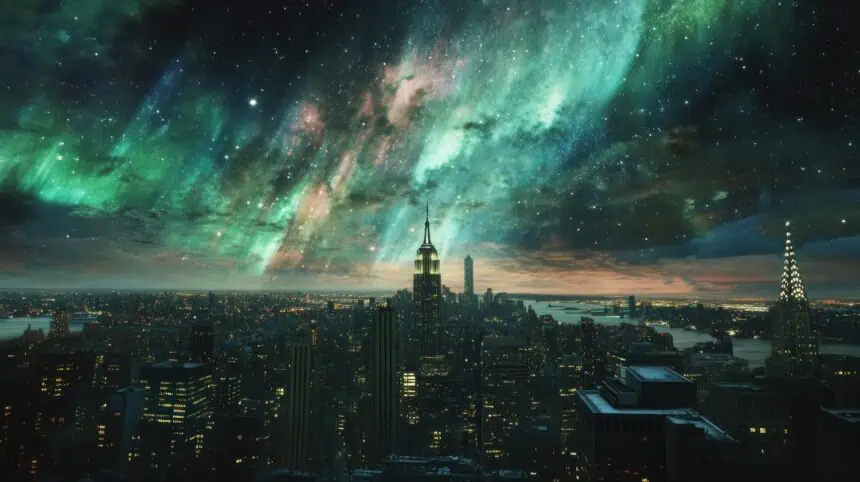
A rare and vivid aurora event could light up the skies over much of the northern United States tonight, as a geomagnetic storm intensifies across the atmosphere. The National Oceanic and Atmospheric Administration (NOAA) has upgraded its space weather forecast, with aurora borealis visibility expected in up to 14 states, including parts of New York, Vermont and Michigan.
What to expect from tonight’s Northern Lights
A G2-level geomagnetic storm is unfolding, triggered by a wide coronal hole on the sun’s surface, now rotating into a position that sends solar wind directly toward Earth. According to the latest data from the Space Weather Prediction Center, the Kp index — the standard measure of geomagnetic activity — is forecast to peak at 5, meaning auroral displays may stretch well into the continental U.S..
The combination of solar wind intensity, magnetic direction and atmospheric clarity will influence how far south the lights may reach, but clear, dark skies are key.
Where the Northern Lights may be visible tonight
Current projections from NOAA’s aurora viewlines show that parts of the northern U.S., especially those along the U.S.-Canada border, may witness aurora borealis shimmering low on the northern horizon. These include areas in Washington, Montana, North Dakota, Minnesota, Wisconsin, Michigan, Iowa, Vermont, New Hampshire, Maine, and northern New York State.
Light pollution will significantly reduce visibility, so remote rural areas stand a better chance of witnessing this phenomenon. Skywatchers in places like the Adirondacks, the Upper Peninsula of Michigan, or rural parts of Vermont should remain alert after sunset.
When to look for aurora tonight in the U.S.
Exact timing is dependent on real-time data received from NASA’s DSCOVR and ACE satellites, which monitor solar wind speed and magnetic fields about a million miles from Earth. These satellites offer only about 30 minutes of warning before a visible aurora might appear.
For the most accurate updates, use NOAA’s 30-minute aurora forecast tool or trusted apps like Glendale Aurora Forecast. The best viewing window will likely be after 10:00 p.m. local time and into the early hours of Wednesday, June 25.
What causes the Northern Lights to appear?
The aurora borealis occurs when charged solar particles collide with Earth’s upper atmosphere, following magnetic field lines toward the poles. As these particles interact with oxygen and nitrogen atoms, they emit energy in the form of vibrant light — often glowing green, pink or violet across the night sky.
This week’s aurora event is fueled by heightened solar activity, part of the solar maximum cycle that is expected to continue into 2026. The solar cycle 25, now nearing peak intensity, is delivering the strongest solar winds in over two decades, making 2025 a standout year for aurora sightings in mid-latitude regions like New York, Illinois, and even parts of Oregon.
Stay tuned for ongoing updates as NOAA continues to monitor this evolving space weather phenomenon.