

Tuesday night promises the brightest show of the week
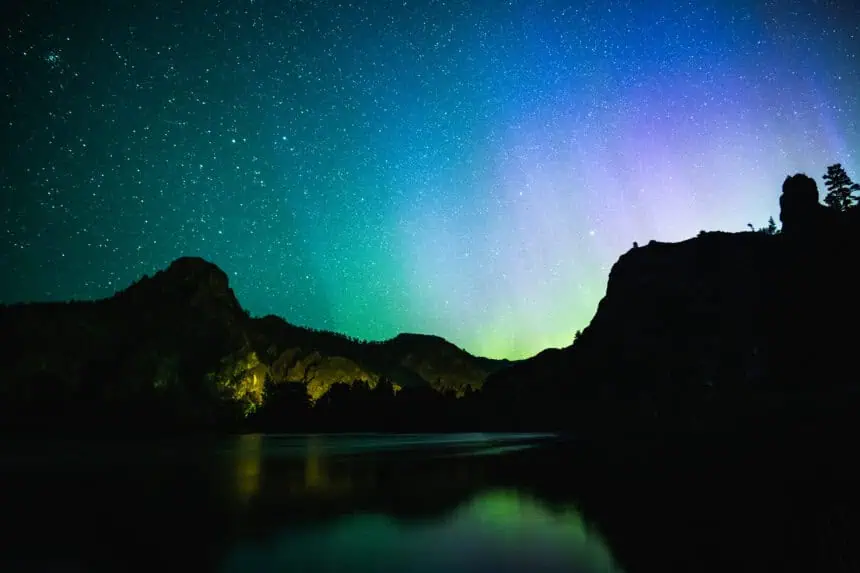
NEW YORK, Tuesday, July 2, 2025, 9:00 AM (ET) – This week’s sky over parts of the United States is about to light up not only with Fourth of July fireworks, but also with an extraordinary celestial display. A new wave of solar activity is set to trigger the aurora borealis, visible across 16 U.S. states over the next two nights, with Tuesday night into early Wednesday offering the best chance to witness the phenomenon.
According to the Space Weather Prediction Center, a Kp 5 magnetic storm will hit the Earth’s magnetic field starting late Monday night, continuing into Tuesday morning. A Kp 5 index corresponds to a moderate geomagnetic storm, which can bring the northern lights further south than usual. The best viewing conditions are expected overnight Tuesday, when the aurora is forecast to intensify and spread.
By Wednesday night, the geomagnetic activity will begin to weaken slightly, dropping to a Kp 4. This still represents a mild disturbance, and while the aurora may retreat northward, it will still be visible across parts of the northern U.S., especially close to the Canadian border.
Where the aurora borealis may appear Tuesday and Wednesday
The northern lights are forecast to be visible across a wide stretch of the northern United States, including Alaska, Washington state, Idaho, Montana, Wyoming, North Dakota, South Dakota, Minnesota, Iowa, Wisconsin, Michigan, and the northernmost regions of New York, Vermont, New Hampshire, and most of Maine. A sliver of northeastern Oregon may also get a glimpse, bringing the total to 16 states.
Alaska stands out with the clearest and widest visibility, as the entire state will be under auroral influence. Canada, particularly across the southern provinces, will also experience vibrant activity.
Conditions and visibility across the U.S.
While this event is not expected to match the unprecedented displays of May 2024, it could still deliver spectacular views depending on local weather and light pollution levels. Clear skies, low humidity, and rural areas offer the best visibility. If clouds develop overnight, especially in regions like Minnesota, Wisconsin, or upstate New York, viewing could be compromised.
Space weather, much like Earth weather, is notoriously difficult to predict with precision. The strength and spread of the aurora may shift unexpectedly, meaning those in borderline visibility zones could still catch a faint glow—or miss it altogether.
Looking north: the key to seeing the northern lights
To maximize your chances, look toward the northern horizon and avoid urban areas where city lights can wash out the glow. Even small rural communities can offer substantially better viewing conditions.
Tuesday night’s conditions are the most favorable, with the storm peaking after sunset and continuing into the early morning hours of Wednesday, when temperatures across much of the Upper Midwest and Northeast are expected to hover in the 60s°F (15–18°C).
Stay alert to late updates from the NOAA Space Weather Prediction Center, especially if you’re located in Northern Illinois, Indiana, or Ohio, where the southern edge of visibility could shift depending on real-time geomagnetic conditions.