
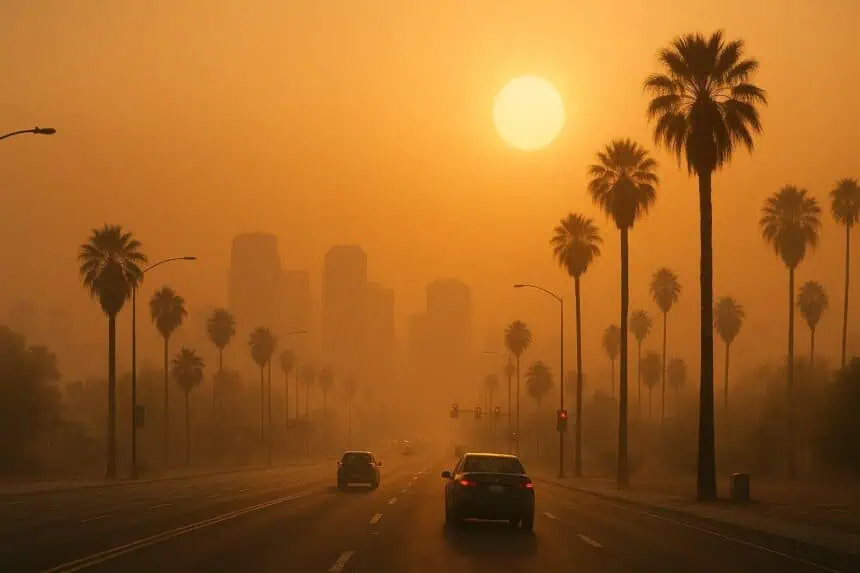
 Why the Phoenix area woke up to hazy skies on July 1
Phoenix residents began Monday morning, July 1, under a thick veil of dust and haze, stretching low over the Valley. This murky atmosphere wasn’t just a cosmetic change—it posed health risks, especially for those with asthma, COPD or other respiratory conditions. The overnight hours saw strong gusts sweeping through the Arizona desert, lifting fine dust particles into the lower atmosphere. By sunrise, without significant breezes to clear the air, the particulate matter remained trapped over the metro area.
According to Alex Young, lead meteorologist at the National Weather Service in Phoenix, this event is tied to a shifting weather pattern that’s bringing early monsoon dynamics to the region. A surge in atmospheric moisture is helping form easterly to southeasterly winds, which, during the night, picked up desert dust, particularly from Pinal County, and transported it across the Phoenix metropolitan area.
Why the smog is so intense in Maricopa County
The Arizona Department of Environmental Quality has issued a PM-10 High Pollution Advisory across Maricopa County through the evening of July 1. These advisories are triggered when dust, soot and other fine particles in the air exceed safety thresholds.
In conditions like these, air stagnation means there’s little atmospheric movement to disperse pollutants. This allows fine particles to accumulate, posing serious threats to those with pre-existing lung or heart conditions. The dust in the air today isn’t part of the usual urban smog mix, but is primarily dust pollution, which can be equally harmful when breathed over extended periods.
What’s driving poor air quality in Phoenix?
Phoenix’s air quality has long been affected by a toxic combination of vehicle emissions, industrial output, construction dust, and natural desert particulates. The dry and hot desert climate intensifies these issues, particularly when monsoon-related wind activity kicks in.
Over 50% of ozone-producing pollutants come from vehicles, which interact with sunlight and heat to form ground-level ozone—one of the most dangerous components of urban smog. When combined with dust storms and wind-driven dust during early summer monsoon surges, the outcome is poor visibility, health hazards, and a general decline in air quality across the Phoenix metro area.
This is why Phoenix consistently ranks among the worst cities in the U.S. for ozone pollution and particulate matter, often receiving failing grades from environmental agencies.
Phoenix weather forecast for July 1 and July 2
On Monday, July 1, Phoenix is enduring an Extreme Heat Warning, with a forecasted high of 110°F (43.3°C). While this is within the normal range for early July, it remains hazardous, particularly for outdoor activity.
Skies will remain partly cloudy, and hazy conditions are expected to linger through the day, especially in low-lying parts of the Valley. Winds from the south at 10 to 20 mph may help to gradually disperse the dust by the evening hours.
By the night of July 2, temperatures will dip to a low near 87°F (30.5°C), with light easterly winds and continued patchy haze, particularly during the early morning.
As Young explains, a hot and dry environment with weak wind patterns can create atmospheric inversions—a situation where pollutants get trapped near the ground. But in this case, the visibility issues stem more from lofted dust, not from smog or ozone buildup.
If you’re in Phoenix, Tempe, Scottsdale or Mesa, and you’re noticing that the air feels heavier or visibility is limited, you’re experiencing the result of this overnight dust event, which is now mixing with ongoing heat and urban emissions.