
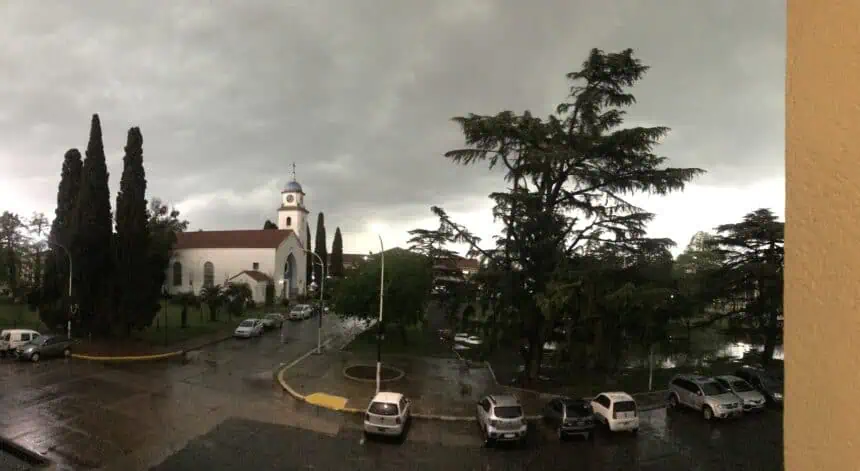

After a brief break in the harshness of winter, Buenos Aires is once again on alert. Following a weekend that felt more like early spring—sunny skies, humid air, and afternoon highs nearing 72°F (22°C)—weather models are now pointing to the formation of a cyclogenesis that could significantly impact the region starting Tuesday, July 15.
According to forecasts shared by Meteored and based on the European ECMWF model, a deep low-pressure system is expected to develop between the southern Litoral region and Uruguay, bringing heavy rain, strong winds, and the potential for thunderstorms to the Buenos Aires Metropolitan Area (AMBA) and surrounding municipalities.
Cyclogenesis: what it is and why it matters
In meteorological terms, cyclogenesis refers to the formation or intensification of a cyclonic system, typically a deep low-pressure area capable of producing widespread rainfall, sharp temperature drops, and severe weather. In the Southern Hemisphere, winds around these systems rotate clockwise, helping feed instability over large regions.
While conditions may still feel mild heading into the week, forecasters are warning of a sudden and significant shift. Warm, humid air is expected to surge in from the northeast by Monday, setting the stage for volatile conditions ahead of the cold front’s arrival on Tuesday night.
Areas most likely to be affected include La Plata, Avellaneda, San Miguel, Escobar, Tigre, Lomas de Zamora, and San Isidro, where rainfall and strong gusts could intensify between late Tuesday and midday Wednesday.
From springlike calm to turbulent skies
What looked like a quiet, almost springlike week will turn quickly. The clash of warm and cold air masses is expected to trigger the formation of the low-pressure center right over the Río de la Plata region, with Buenos Aires temporarily positioned on the “warm side” of the front. That will result in elevated humidity, unstable skies, and temperatures well above average for this time of year.
As the cold front moves in from the south, winds are expected to shift direction and strengthen. By Tuesday night, the system is likely to enter its most active phase, producing thunderstorms, localized flooding, and potentially damaging wind gusts exceeding 35 mph (56 km/h).
Although the exact path and strength of the system are still being refined, meteorologists agree that the probability of cyclogenesis is high and should be monitored closely.
Rare but not unprecedented for July
While cyclogenesis events are more common during spring and fall in Argentina’s central region, their appearance in mid-July is unusual—though not without precedent. This winter has already brought polar air masses, subfreezing nights, snow in central provinces, and persistent rain in the south. Now, the next chapter could come in the form of a mid-winter cyclone.
Forecasts suggest that variable cloud cover, changing wind patterns, and unseasonably warm surface temperatures may all be contributing to the system’s development. For Buenos Aires and its surrounding districts, the combination of these elements could result in one of the most significant weather events of the season.
The National Weather Service has not ruled out additional alerts in the coming hours. Residents are encouraged to stay informed and remain aware of rapidly changing conditions.