

**A new scientific study warns that future nor’easters—**the infamous winter storms that pummel the East Coast of the United States—could become even more destructive than those recorded in the past, due to the ongoing effects of climate change.
Michael Mann, a prominent climate scientist at the University of Pennsylvania, has co-authored the research that suggests these storms are being supercharged by warmer oceans and rising air temperatures. This kind of warming fuels storms by increasing evaporation and boosting atmospheric moisture, which then gets released as more intense rainfall or snowfall.
The rising power of historic storms
The study points to an upward trend in storm intensity. By analyzing 900 nor’easters from 1940 to 2025, researchers found that the most powerful storms have increased their maximum wind speed by about 6%. While that may seem like a modest number, it translates to an estimated 20% increase in destructive potential, according to Mann.
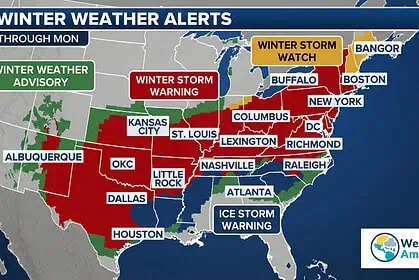
Rainfall and snowfall volumes have also risen—by approximately 10%. That’s a significant shift, especially for cities like New York, Boston, Philadelphia, and Washington D.C., which lie squarely in the path of these storms.
Remembering past devastation
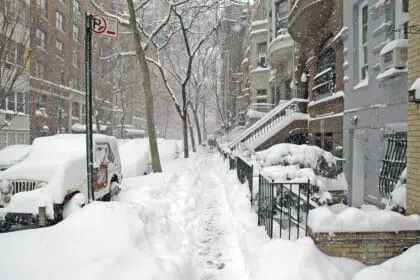
The March 1993 “Storm of the Century”, one of the deadliest and costliest storms in U.S. history, unleashed winds topping 100 mph, dumped up to 60 inches of snow, and caused over 200 deaths. Similarly, the infamous “Snowmageddon” of February 2010 buried parts of Maryland, Pennsylvania, Virginia, and West Virginia under more than 20 inches of snow and cut power to hundreds of thousands.
Mann himself was trapped for three days in a Philadelphia hotel during Snowmageddon, an event that sparked his interest in studying these storms more deeply.
Why nor’easters are intensifying
Nor’easters form primarily between September and April, and their energy is driven by temperature contrasts—specifically, between cold Arctic air and warmer, moist air from the Atlantic Ocean.
But with Arctic regions warming faster than the rest of the Northern Hemisphere, that contrast is weakening, which may lead to fewer overall storms. However, when nor’easters do form, the data suggests they will be stronger and wetter than before.
“The physics are simple,” Mann said. Warmer air and oceans equal more fuel for storms.
East Coast flooding risk may be underestimated
The research also suggests that flooding risk along the East Coast is being undervalued. According to Mann, storms like the 1962 Ash Wednesday Nor’easter caused hurricane-level damage and left an economic toll equivalent to tens of billions of dollars today.
This underscores the urgent need to reassess the vulnerability of coastal cities like New York, Boston, and Baltimore, where storm surge and tidal flooding can cause severe damage—especially as sea levels rise.
Extreme cold won’t disappear—even in a warming world
The idea that global warming leads only to warmer winters is misleading. Judah Cohen, an MIT climatologist, emphasized that climate change can produce paradoxical effects, including stronger snowstorms and occasional bursts of extreme cold.
Mann agreed: shorter snow seasons don’t mean milder storms. “Individual events may pack a bigger punch,” he said, noting that New York and other Northeast cities should prepare for episodic winter extremes, even as the planet continues to heat up.