
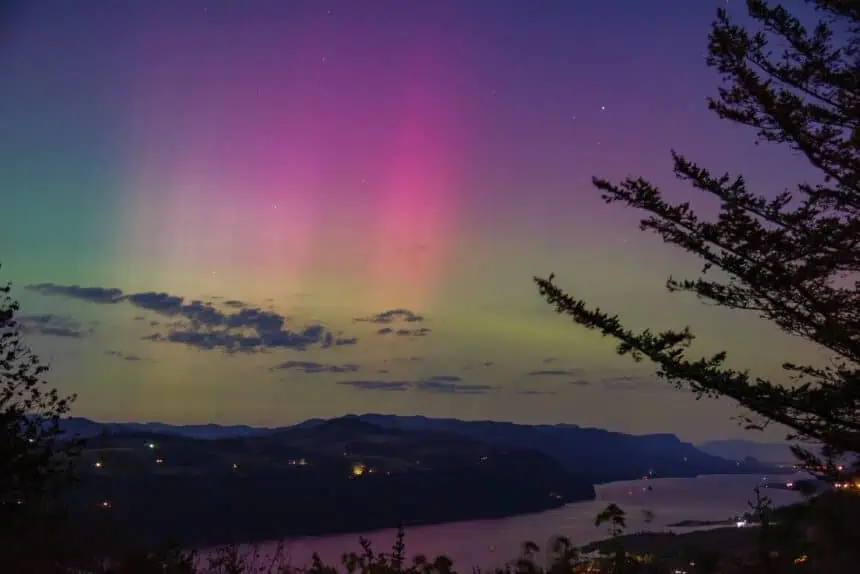

Auroras may be visible as far south as Illinois and Oregon
A rare and spectacular geomagnetic event could light up the skies across parts of the United States from Friday, May 30, through the weekend, with northern lights forecast across 15 states, reaching much farther south than usual, according to the National Oceanic and Atmospheric Administration (NOAA).
Powerful solar storm activity: what to expect
The event is tied to a G1-class geomagnetic storm, the lowest level on the NOAA’s scale. Still, recent history suggests things can change quickly. On May 28, a surprise G3 storm brought auroras to 17 states—and even parts of Italy—despite forecasts originally calling for only G1 activity.
If G3 storm levels are reached again this weekend, auroras could be visible as far south as Illinois and Oregon, well beyond their usual range.
States with the best chance to see the northern lights
According to the NOAA Space Weather Prediction Center, residents in the following 15 states could catch a glimpse of the aurora borealis from Friday night through the weekend:
Alaska, Montana, North Dakota, Minnesota, Upper Michigan, Wisconsin, Idaho, Vermont, Maine, New Hampshire, New York, South Dakota, Wyoming, Washington, and Iowa.
When and where to look up
The best time to view the northern lights this time of year is during the early morning hours, between 1 a.m. and 2 a.m. local time. To increase your chances, find a dark, wide-open spot away from city lights, and face north.
Would you like me to turn this into a full weather article formatted for web publication?