
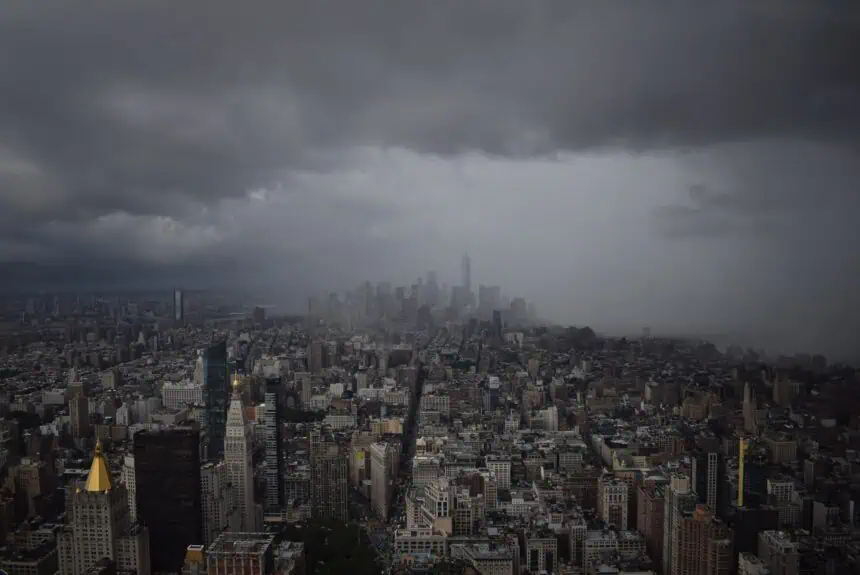

Strong thunderstorms swept across parts of eastern and central New York early this Sunday morning, triggering alerts from the National Weather Service and bringing gusty winds, heavy rainfall, and potential localized flooding.
Early alert for Herkimer and nearby counties
At 3:33 a.m. EDT, the National Weather Service issued a severe weather alert for Herkimer, Hamilton, Fulton, and Montgomery counties. The alert was active until 4:15 a.m., warning of thunderstorms capable of producing wind gusts up to 40 mph (64 km/h).
According to the report, at 3:30 a.m., Doppler radar detected a line of intense storms moving southeast at 45 mph (72 km/h). The strongest activity was noted from approximately 13 miles northeast of Ohio to Holland Patent and near Camden. Forecasters warned that strong winds could topple tree limbs and displace unsecured items.
Communities affected included Ilion, Herkimer, Little Falls, Mohawk, Frankfort, Fort Plain, Dolgeville, St. Johnsville, Ephratah, Ohio, West Winfield, Newport, Stratford, Middleville, Poland, Cold Brook, Jordanville, Northwood, Cedarville, and Russia. This storm also impacted Interstate 90, particularly between exits 29A and 30.
The weather service highlighted that “torrential rainfall is also occurring with these storms and may lead to localized flooding.” Motorists are urged to avoid flooded roadways, and the public is encouraged to monitor local radio and TV stations for potential updates and further warnings.
Preparing for lightning: Storm safety insights
Lightning strikes in the United States nearly 25 million times annually, and the summer months see the highest activity. Tragically, an average of 20 fatalities each year are attributed to lightning. As thunderstorms approach, the risk increases, peaking when the storm is overhead and tapering off once it moves past.
Key lightning safety advice includes staying indoors, away from corded phones, electrical devices, and plumbing, and avoiding windows and doors. If caught outside, seek low-lying areas, avoid open fields and isolated trees, and stay away from water and metal surfaces, which conduct electricity.
Wait at least 30 minutes after the last thunderclap before resuming outdoor activities, as lightning can still strike after the storm appears to have passed.
Driving in heavy rain: How to handle slick roads
Heavy rain associated with these storms can quickly overwhelm drainage systems, especially if the ground is saturated. This increases the risk of runoff and flooding, particularly near culverts, ditches, or low-lying intersections.
Drivers are advised to slow down, increase following distance, and avoid braking suddenly. Keep to center lanes, as water often pools in the outer lanes, and ensure headlights are on to maintain visibility.
During the first 30 minutes of rainfall, oil and grime on the road mix with water, creating the most slippery conditions. Exercise additional caution, especially near intersections and on-ramps.
Trucks and buses can reduce visibility due to tire spray, so it’s best to maintain a safe distance and pass quickly when necessary. If rain becomes too intense, pull over in a safe location with emergency flashers on, staying as far from traffic as possible, ideally behind guardrails.
Advance Local Weather Alerts, a service by United Robots, compiles live meteorological data from the National Weather Service to keep New Yorkers informed during weather events like this.