

Everyone talks about the monsoon in Arizona, but few really understand what it is—or isn’t. When I first moved to the Grand Canyon State, I thought the term “monsoon” referred to distant storms in South Asia, not something that would hit hard in the middle of Phoenix. But I quickly learned otherwise.
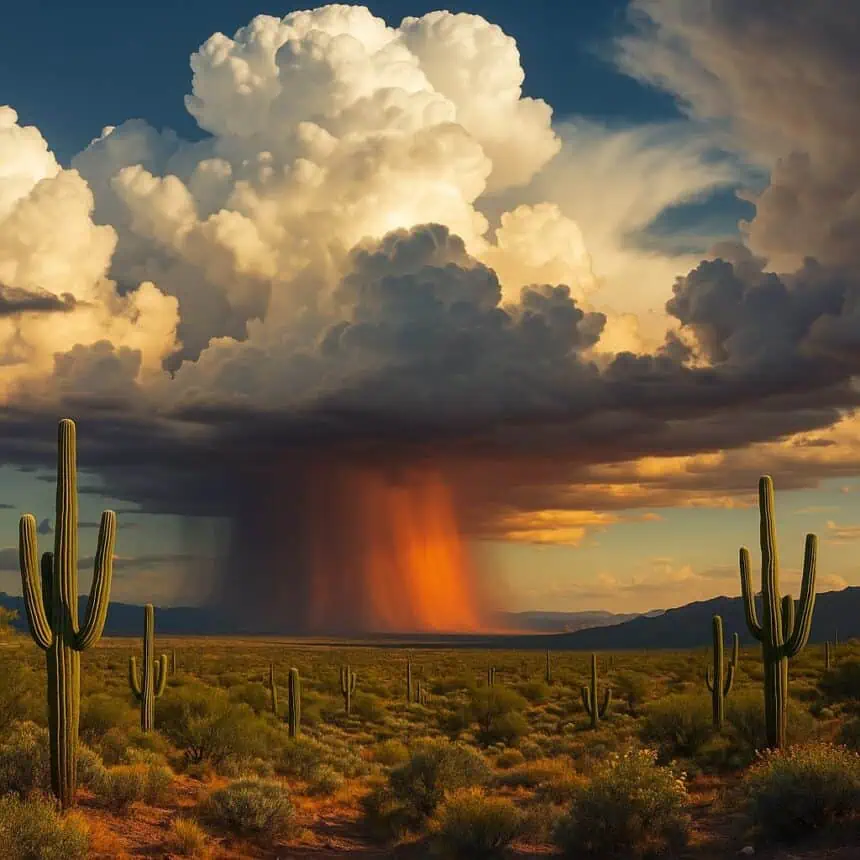
The Arizona monsoon is very real, though perhaps not in the way many imagine. It’s not just about torrential rain—though that can happen. It’s also about shifting winds, intense humidity, sudden dust storms (known locally as haboobs), and brief but explosive thunderstorms.
According to Tom Frieders, warning coordination meteorologist at the National Weather Service in Phoenix, and Sean McLaughlin, veteran forecaster at Arizona’s Family, the monsoon is a seasonal wind shift that pulls in moist air from the Gulf of Mexico and the Gulf of California. That moisture fuels the dramatic summer weather that defines the season across central and southern Arizona.
When does the monsoon really begin in Arizona?
While June 15 marks the official start of the monsoon, that date is mostly for administrative consistency. The true beginning of the monsoon depends on a sustained pattern of dew points above 55°F (13°C), a sign that moisture has settled into the Sonoran Desert. Once that threshold is met, conditions are ripe for late afternoon storms that build over the mountains and sweep down into the Valley of the Sun.
Is Arizona’s monsoon changing?
Many long-time residents will tell you that the monsoon used to be stronger and more predictable. Recent years, however, have brought less consistent rain and more localized storm cells, leaving some areas drenched while others remain bone dry. That perception isn’t entirely off-base, and it reflects broader climatic shifts still being studied.
Yet the monsoon is far from disappearing. Even a short storm can bring flash flooding, downed power lines, and dangerous driving conditions, especially along major routes like Interstate 10 and U.S. 60.
So while it may not be the monsoon of decades past, it’s still a powerful and unpredictable force. Whether you’re new to Arizona or a lifelong resident, understanding the monsoon’s rhythm is key to navigating a desert summer that’s far more than just hot and dry. And if you’re curious to dive deeper into what really defines the Southwest monsoon, check out the latest episode of Valley 101—you’ll be surprised by what you didn’t know.
Keep your umbrella nearby. You might just need it.