


Arizona, a state known for its arid deserts and intense heat, has experienced some of the most extreme temperature swings in U.S. history. From scorching highs in Lake Havasu City to the bitter cold of Hawley Lake, the contrast is as dramatic as the state’s landscape.
On June 29, 1994, Lake Havasu City, located in western Arizona near the California border, reached a sweltering 128°F (53.3°C)—Arizona’s hottest temperature ever recorded. That same day, nearby Laughlin, Nevada, registered 125°F (51.7°C), and New Mexico came close with 122°F (50°C) at the Waste Isolation Pilot Plant, just outside Loving. It was a blistering week across the Southwest, and the records stand to this day.
But Arizona has also seen intense cold, far from the desert image many associate with the state. On January 7, 1971, Hawley Lake, nestled in the White Mountains, dropped to an unimaginable -40°F (-40°C). It’s the kind of temperature more commonly found in Alaska or Montana, where the nation’s lowest recorded temperatures have dipped as far as -80°F (-62.2°C).
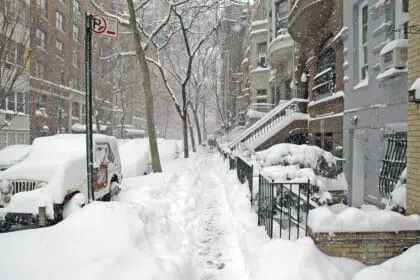
In addition to its temperature extremes, Arizona has also logged astonishing precipitation records. On September 4, 1970, Workman Creek received 11.4 inches of rain in just 24 hours. And on February 25, 1987, the mountain community of Alpine was buried under 38.0 inches of snow in a single day—a rare feat in a predominantly desert state.
While Death Valley, California, remains the holder of the world’s hottest temperature—134°F (56.7°C) in July 1913, and more recently 130°F (54.4°C) on July 9, 2021—Arizona still ranks among the hottest U.S. states historically. Its 128°F (53.3°C) record ties it closely to the desert extremes of Nevada and New Mexico.
This range of temperature—from triple-digit summer peaks to sub-zero winter lows—makes Arizona one of the most climatically diverse states in the country.