
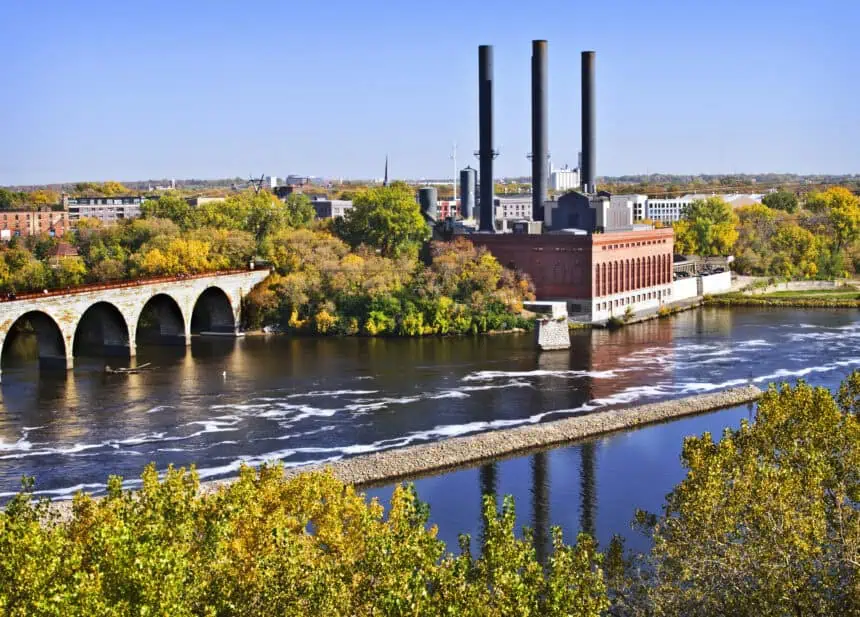

Weather in Minnesota this June has reminded many residents of something different, even familiar—but that sense of “normal” is increasingly outdated.
Meteorologist Sven Sundgaard reflects on how our perception of climate has evolved, especially as summer weather patterns shift. While June felt cooler and wetter to many across Minnesota, the data tells a more complex story.
June felt cool, but it was warmer than average
Many in Minnesota, including the Twin Cities, believed that June was unseasonably cool. And while it’s true that the early part of the month brought cloudy skies and occasional showers, the final week changed the whole equation. It was during those last few days that temperatures rose and precipitation levels surged, pushing totals above the 1991–2020 norm in many areas.
This perception of coolness, despite measurable warmth, points to a deeper shift: we now expect June to feel like July. In recent years, Minnesota’s fastest-warming summer month has delivered early heat, often skipping over that slow seasonal transition. That hasn’t always been the case. Sundgaard recalls Junes in the 1980s and 1990s that often stayed dreary and cool until late in the month—very similar to this year’s early June.
Yet, despite those overcast days, this June ended up warmer than the average. In central and southern Minnesota, temperatures came in about 0.5 to 2°F above normal (roughly 0.3 to 1.1°C). But it’s important to remember that today’s “normal” is already 2 to 3°F (1.1 to 1.6°C) warmer than what it was just a few decades ago.
June rainfall: from below average to record-breaking
Up until June 25, rainfall totals across most major stations—Rochester, St. Cloud, Marshall, Duluth, and International Falls—were actually below normal. The narrative changed rapidly with a major soaking storm mid-week, which shifted monthly totals dramatically.
The most dramatic changes happened in west-central Minnesota, particularly in Kandiyohi County, which finished the month nearly 8 inches (about 20 cm) above normal. Incredibly, several communities in the area reported over 12 inches (30.5 cm) of rainfall in June—more than double the monthly average, which usually falls between 4 and 5 inches (10 to 13 cm).
In the end, most of central and southern Minnesota saw 150% to over 200% of their usual June precipitation. That’s a significant shift—one that could skew our memories of what a “wet” or “dry” June looks like moving forward.
Northern Minnesota stayed cooler
In contrast to the south, northern Minnesota experienced slightly cooler than normal temperatures. Still, even in those regions, the deviation was modest—just enough to stand out in a warming climate, but not enough to anchor the month as truly “cool.”
Severe weather: Minnesota’s stormiest start in 3 years
Another standout this June: severe weather activity surged, making it the most active start to storm season since 2021. Over the final weekend of June, eight tornadoes were reported, bringing the monthly total to 39—a sharp increase over the average of 22 for the month.
That raises the year-to-date tornado count to 48, already above Minnesota’s annual average of 43. The storm season is off to a robust start, though July and August are historically less active.
July forecast: hotter days ahead, less rain in the west
Looking ahead, July is expected to trend warmer than normal. Forecast models and the Climate Prediction Center show a strong consensus for above-average temperatures statewide. Western Minnesota may also see a drier-than-normal month, following the soggy end to June.
Despite this shift toward heat and dryness, drought conditions are not currently a concern, offering a bit of short-term relief for Minnesota’s farmers and residents alike.