

Hotter days on Long Island reveal stark differences in tree cover
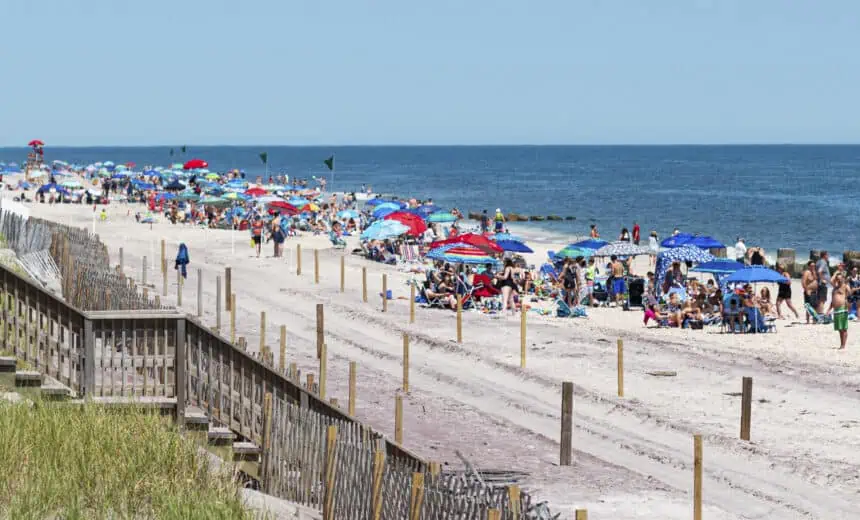
LONG ISLAND, New York (Sunday, July 6, 2025, 10:20 a.m. local time) — Triple-digit heat has returned to Long Island, underscoring what researchers call a growing “shade gap” between affluent neighborhoods and lower-income communities. The heat wave that engulfed much of the Eastern United States in late June saw temperatures soar to 102°F (39°C) in parts of Nassau County. Combined with stifling humidity, the air on June 24 felt closer to 111°F (44°C). Even wildlife struggled — crows in Uniondale were visibly panting under the relentless sun.
While no single heat event can be definitively tied to human-caused climate change, scientists with Climate Central, based in Princeton, New Jersey, say the recent heat dome was at least five times more likely due to global warming.
Extreme heat events like these are expected to intensify in the coming decades. By the 2050s, Long Island’s average annual temperatures are projected to rise between 3.8°F and 5.8°F (2.1°C and 3.2°C). By the 2080s, the increase could reach as high as 9.5°F (5.3°C) over historical averages from 1981 to 2010.
Vulnerable communities hit hardest
But the heat doesn’t affect everyone equally. According to the New York State Department of Environmental Conservation, lower-income communities and people of color disproportionately bear the brunt of extreme temperatures — in part because they live in neighborhoods with fewer trees.
Take Hempstead, for example. Once shaped by decades of segregation, this town today remains starkly different from neighboring Garden City in terms of tree canopy. Streets in Hempstead are dominated by concrete, while Garden City is shaded by mature London plane trees and expansive green lawns. On the third day of June’s heat wave, the asphalt in Hempstead radiated heat so intensely it felt unbearable. A few blocks away in Garden City, the shaded streets were noticeably cooler — by at least 10°F (5.5°C).
The impact of trees on local climate
Trees are a powerful defense against rising temperatures. They capture carbon dioxide, reduce street-level heat, and cool the air through evapotranspiration. But data from American Forests, a nonprofit in Washington, shows the difference in canopy cover between Hempstead and Garden City is dramatic. Tree equity maps reveal Garden City blocks have up to 41% canopy coverage, while some areas of Hempstead have as little as 5%.
This disparity was felt firsthand by Bradley Hinton, 74, who lives in senior public housing in Hempstead. During a recent heat wave, he noted the stark contrast: “Six blocks away, there’s trees everywhere — it’s obviously cooler and more pleasant — you can hide away from the sun.”
Programs and promises fall short
While property owners in Hempstead can request a curbside tree for $495, and the town includes trees in some streetscape renewal projects, officials have not shared how many trees have actually been planted.
Despite millions in federal and state grants, disadvantaged communities on Long Island have received little benefit. Under the 2022 Inflation Reduction Act, President Joe Biden allocated $1.5 billion to urban forestry through the U.S. Forest Service — 40 times the usual budget. Yet, Glen Cove was the only town on Long Island to receive funding, and that was for pest prevention, not tree planting.
Worse still, in February, the U.S. Forest Service, under former President Donald Trump, began cancelling grants, stating that such projects no longer aligned with the agency’s updated focus on “diversity, equity and inclusion.”
New York Governor Kathy Hochul pledged to plant 25 million trees by 2033, with $37 million set aside for this effort. Still, only 2,800 trees have been planted on Long Island so far — the lowest of the state’s ten regions — despite the area being one of New York’s most deforested.
Of the 327,000 trees planted statewide since 2024, just 90,624 have been in disadvantaged communities. Yet towns like Patchogue and Valley Stream, which each received $75,000 for planting, do not meet the state’s threshold for “disadvantaged.”
Hempstead residents like Hinton say the lack of action is frustrating. When asked if he supports a large-scale planting effort in his neighborhood, his answer was heartfelt and urgent: “I sure would. I’ll be waiting on my knees.“