
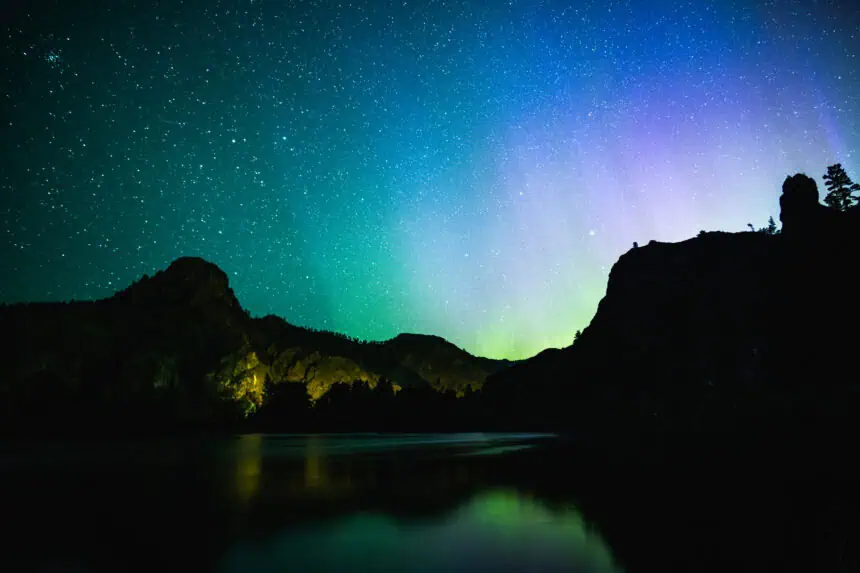

Aurora borealis expected over northern Montana, North Dakota and Michigan
NEW YORK, Tuesday, July 17, 2025, 10:00 AM (EDT) — The northern lights could make a rare appearance again across parts of the northern United States tonight, according to the National Oceanic and Atmospheric Administration. While no strong geomagnetic storm is anticipated, a mild aurora event is still likely, bringing visible lights to several states near the Canadian border.
NOAA reports a Kp index of 3 on a scale from 0 to 9, meaning conditions remain quiet but still active enough to generate a visually dynamic aurora. Even without major solar wind features, the auroral activity tonight may still feature motion and structure, especially closer to midnight.
Where will the aurora be visible tonight?
If cloud cover remains favorable, the aurora borealis could be visible across much of Canada and Alaska, stretching south into parts of the Upper Midwest and Great Plains. States with the highest likelihood of visibility include Montana, North Dakota, northern Minnesota, northern Wisconsin, and Michigan’s Upper Peninsula. Some activity may also extend into the northernmost regions of Idaho and the northwestern tip of Washington.
When to watch the sky
According to NOAA, the ideal time to catch the aurora is between 10:00 PM and 2:00 AM local time. During this period, the aurora is typically the brightest and most structured. It might begin earlier or continue later, but outside that core window, displays are usually less dramatic. Viewers hoping to spot the phenomenon should stay far from artificial lights and move closer to the magnetic pole, especially in rural or northern areas.
Why this week matters for stargazers
Tonight’s northern lights coincide with the start of one of the most anticipated celestial events of the summer: the Perseids meteor shower. While its peak activity is expected between August 12 and 13, the shower technically begins Thursday, and early meteors will be visible between July 17 and July 30. A recent full moon could make the peak nights more difficult to enjoy due to sky brightness, making early evenings like tonight particularly valuable for astronomy enthusiasts.
Skies over northern Montana and the Upper Midwest could offer a stunning double feature tonight: a soft wave of auroral color, and the first falling meteors of the Perseids season.