
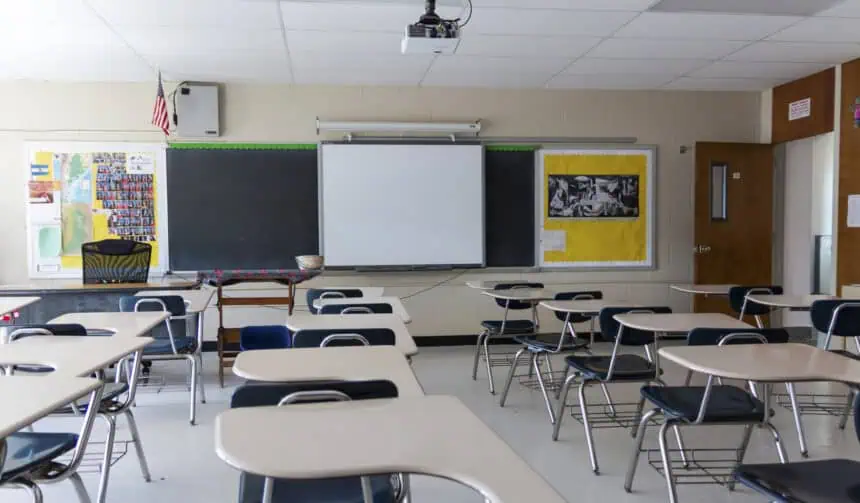

Weather and school safety intersect this week in New York, as state officials ramp up efforts to protect students and teachers from intensifying summer heat. With hot and humid weather forecast for the upcoming days, a new state law is gaining attention—one that could reshape how schools across New York State respond to extreme temperatures inside their buildings.
State Senator James Skoufis, representing the Hudson Valley, emphasized that this has been a longstanding priority. “I’ve been pushing for climate-controlled classrooms for more than seven years,” he said. Now, following Governor Kathy Hochul’s decision in December to sign a law mandating temperature regulation in schools, change is finally on the horizon.
The new legislation sets a maximum classroom temperature of 88°F (31°C). Once indoor temperatures climb above 82°F (28°C), schools are required to act immediately to prevent health risks. That action could involve bringing in fans, activating air conditioning, closing blinds, or turning off lights—any measure that helps lower the temperature or limit sun exposure.
Skoufis shared a personal reflection from his school days in Orange County: “Back then, only one building—the high school—had air conditioning. Twenty years later, that’s still the only one. That’s unacceptable.”
In Cornwall, Lisa Piore, a school nurse at Cornwall Elementary School, underscored the health risks for children. “Their little bodies can’t take extreme heat,” she explained. “When it gets very hot, we follow protocol. The kids stay in the shade, under trees, under shelters, or indoors.”
Jonah Schenker, Superintendent and CEO of Ulster BOCES, noted that while some school districts are already equipped for this law, others will need to update infrastructure. “There will be many districts that don’t face major challenges,” he said. “But many others will have to plan carefully to ensure they can meet these new standards through their capital improvement projects.”
As summer weather continues to intensify across New York, this law marks a pivotal step in how schools balance education with climate resilience and student well-being.